Strait of Hormuz: Iran's Strategic Leverage or Hostage Taker?
Oct 28, 2026, 12:56 IST
Summary
The debate on Iran's control of the Strait of Hormuz reveals contrasting views. Major Gaurav Arya argues it poses few repercussions for Iran, while Ajit Anjum highlights threats to global oil exports. Pravin Sawhney emphasizes Iranian military oversight, and Khanversation discusses potential U.S. financial strains and Iran's ability to impose transit fees. Amit Sengupta notes internal Iranian aggression versus external diplomacy.
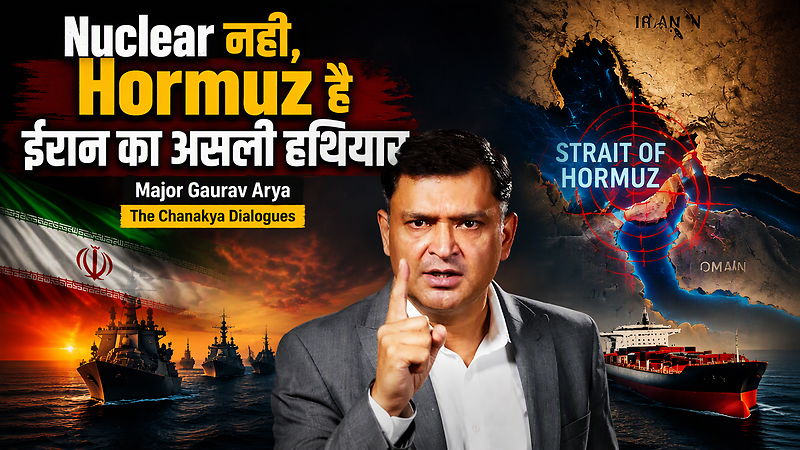
The debate surrounding Iran's control of the Strait of Hormuz raises critical questions about its potential to hold the world hostage. Major Gaurav Arya from The Chanakya Dialogues asserts that Iran's ability to block this crucial maritime route poses minimal immediate repercussions. He argues, 'Iran can block the Strait of Hormuz with few immediate repercussions,' suggesting that unlike nuclear weapons, which are a deterrent but effectively unusable due to catastrophic consequences, closing Hormuz temporarily would not result in significant backlash against Iran.
In contrast, Ajit Anjum highlights the ongoing tensions between Iran and the United States, noting that Iranian threats to halt oil and gas exports have led to renewed U.S. airstrikes aimed at weakening Iran's military capabilities. Anjum states, 'Iran's IRGC threatened to halt all West Asian oil and gas exports,' indicating that Iran's control over Hormuz is not merely a bargaining chip but a serious threat to global energy supplies.
Pravin Sawhney provides further context by emphasizing Iran's military preparedness in the region, claiming that 'Iran and Oman would manage Strait of Hormuz security under IRGC oversight.' He argues that this arrangement could lead to a significant Iranian influence over maritime security, allowing them to dictate terms to international shipping.
Khanversation takes a nuanced view, suggesting that while Iran's actions could potentially raise oil prices significantly, they also point to the financial strain on the U.S. military. They argue, 'The United States has already fired more than 2,000 missiles, costing billions,' linking military engagement in the region to the broader economic implications for the U.S. due to rising oil prices.
Further complicating the discussion, Khanversation posits that Iran could profit from the situation by imposing transit fees if the U.S. blockade continues, stating, 'Iran could levy Strait of Hormuz transit fees, slightly increasing oil prices.' This suggests a potential for Iran to turn a crisis into an economic opportunity, further complicating the U.S. position.
Amit Sengupta notes a shift in Iranian rhetoric, suggesting that the internal consensus within Iran appears more aggressive than their external communications. He observes, 'Iran treats Hormuz as leverage, while the United States needs it open,' highlighting a crucial disparity in how each side views the strategic importance of the Strait.
In conclusion, while Arya sees Hormuz as a low-risk weapon for Iran, Anjum and Sawhney illustrate the serious geopolitical ramifications of such control. The perspectives underscore a complex interplay of military strategy, economic implications, and diplomatic negotiations, suggesting that the Strait of Hormuz remains a pivotal point in international relations, capable of influencing global stability and energy markets.