Taj Mahal's Origins: History, Harassment, and Courtroom Controversies
Jul 8, 2026, 16:30 IST
Summary
The debate surrounding the Taj Mahal's origins intensifies as legal petitions resurface. YouTuber Ajit Anjum criticises the distraction from pressing national issues, citing past court rejections of similar claims. In contrast, Sandeep Balakrishna presents a harsh view of Shah Jahan's reign, alleging abuses during the Taj Mahal's construction. Together, these perspectives highlight the complex interplay of history and politics.
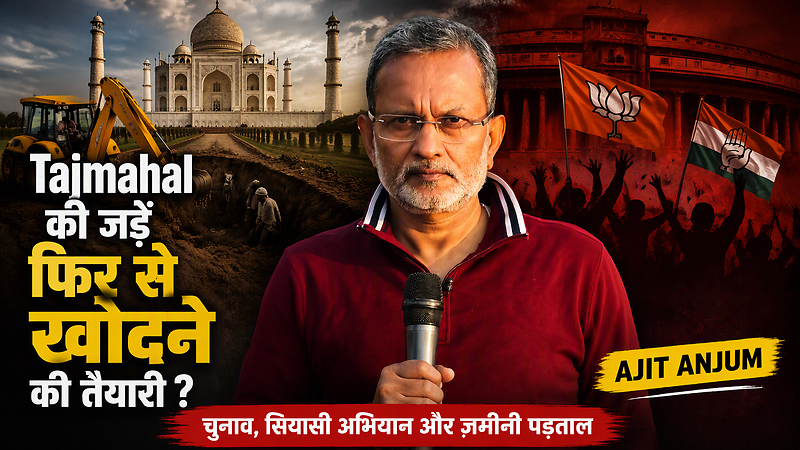
The Taj Mahal, an emblem of India's cultural heritage, finds itself at the centre of a heated debate as legal petitions regarding its origins resurface. Popular YouTuber Ajit Anjum highlights the absurdity of focusing on the Taj Mahal's alleged hidden history amidst pressing national issues. In his video, he notes that while the country grapples with significant challenges, including economic struggles and student protests, the pursuit of claims that the Taj Mahal conceals a Hindu temple beneath its surface distracts from real concerns. He recounts how a 2019 petition in Agra sought an inspection of the monument, but the court rejected it due to a lack of substantial evidence. Anjum points out that similar petitions have been dismissed in the past, including one from P.N. Oak, a historian known for promoting the Tejo Mahalaya theory, which claims the Taj Mahal was originally a Hindu temple. The Supreme Court previously dismissed Oak's petition, stating that he harboured a 'mania' regarding the Taj Mahal's history.
In a related perspective, Anjum addresses a previous petition from May 2022, where Rajneesh Singh, a media officer for the BJP, requested the opening of 22 rooms in the Taj Mahal, alleging they might contain Hindu idols. Anjum quotes the court's response, where justices D.K. Upadhyay and Subhash Vidyarthi admonished Singh, asserting that the misuse of public interest litigation should not be tolerated. They insisted that those seeking to uncover historical truths should pursue academic research instead of burdening the courts with frivolous claims.
Contrasting sharply with these legal perspectives, Sandeep Balakrishna from The Dharma Dispatch presents a provocative narrative that depicts Shah Jahan, the Mughal emperor who commissioned the Taj Mahal, as a tyrant. In his video, he alleges that the construction of the monument involved horrific abuses, including the mutilation of workers to prevent them from creating rival masterpieces. He paints a grim picture of Shah Jahan’s reign, suggesting that the economic burdens imposed on the Bengal province led desperate parents to castrate their sons for sale as slaves to meet oppressive tax demands. Balakrishna's claims add a layer of moral outrage to the ongoing debate about the Taj Mahal's legacy, challenging the romanticised view of its origins.
While Anjum and Balakrishna approach the topic from different angles, they both critique the motivations behind the current petitions concerning the Taj Mahal. Anjum focuses on the legal dismissals of such claims, arguing they detract from pressing societal issues, while Balakrishna takes a historical lens, revealing alleged atrocities linked to the monument's creation. This multifaceted debate encapsulates the complexities of interpreting India's past, where historical narratives intersect with contemporary political agendas and public sentiments, making the Taj Mahal a focal point of both reverence and controversy.