Talks with Pakistan: Dialogue or Betrayal?
Nov 3, 2026, 22:30 IST
Summary
The debate on India-Pakistan talks reveals stark divisions. Omar Abdullah questions the sincerity of Pakistan, while Manish Tewari recalls terrorism linked to dialogue. Retired Lt. Gen. P.R. Shankar sees Pakistan's issues as political. Youtuber Aadi criticizes Aman ki Asha's calls for diplomacy. Dr. Qamar Cheema argues Pakistan seeks dialogue, emphasizing the need for normalized relations.
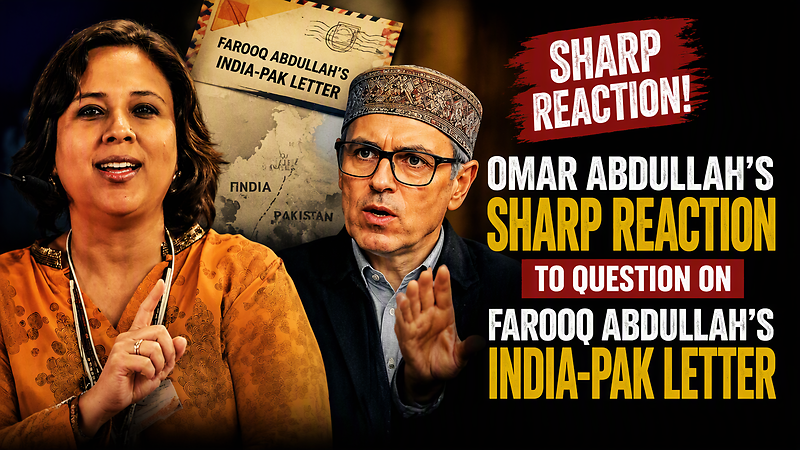
The debate over whether India should engage in talks with Pakistan has intensified, with various voices articulating starkly contrasting views. Omar Abdullah sharply reacted to inquiries about Farooq Abdullah's letter advocating dialogue, asserting that the BJP has much to offer India, while questioning Pakistan's sincerity in the process. His comments highlight a sentiment among some that dialogue may be futile given Pakistan's history of terrorism.
Manish Tewari, a prominent Congress politician, vehemently opposes talks with Pakistan, recalling the Pahalgam massacre where innocent tourists were killed. He argues that every attempt by India to foster relations has been met with terrorism sponsored by Pakistan, stating, "the only thing India wants from Pakistan is an end to the export of terrorism." This sentiment resonates with those who feel that engaging with Pakistan is tantamount to betrayal of India’s security interests.
In contrast, retired Lieutenant General P.R. Shankar presents a nuanced perspective, suggesting that Pakistan's instability is primarily political, stemming from issues in regions like Balochistan and Khyber Pakhtunkhwa. He argues that understanding Pakistan's internal challenges could inform India's approach, advocating for a political rather than military response to the ongoing tensions.
Youtuber Aadi criticizes the Aman ki Asha signatories, who advocate for restoring diplomatic relations with Pakistan. He points out that while they call for dialogue, Pakistan continues to send terrorists into India, making their proposals seem disingenuous.
Shubhankar Mishra raises the question of whether India has lost anything by halting dialogue with Pakistan since 2019, suggesting that previous discussions yielded no benefits. He warns that resuming talks now could signal to Pakistan that India is under pressure, undermining its position.
Dr. Qamar Cheema, a political commentator, argues that Pakistan desires dialogue while India appears resistant. He notes that diplomatic contacts indicate a willingness from Pakistan to engage, while India’s reluctance persists. He emphasizes that without addressing the Kashmir issue through diplomatic means, the cycle of conflict will continue.
Cheema further contends that India must normalize relations with its neighbors to enhance its global standing, suggesting that the current hostility serves as a barrier to India's ambitions. He points out that a cooperative neighborhood is crucial for India’s stability and growth.
The contrasting positions highlight a significant divide: some advocate for dialogue as a means to peace, while others view it as a betrayal of national security. The debate continues as both nations grapple with their historical grievances and the possibility of future relations.