The 33% Women's Quota Debate: Delimitation Delays or Justified Caution?
Nov 26, 2026, 21:00 IST
Summary
The debate over the 33% women's quota in Indian legislatures intensifies as Prime Minister Modi calls for immediate implementation, while women's organizations and the Congress party criticize the linkage to census and delimitation. Activists argue that delaying representation harms women's rights, urging action now rather than waiting for bureaucratic processes.
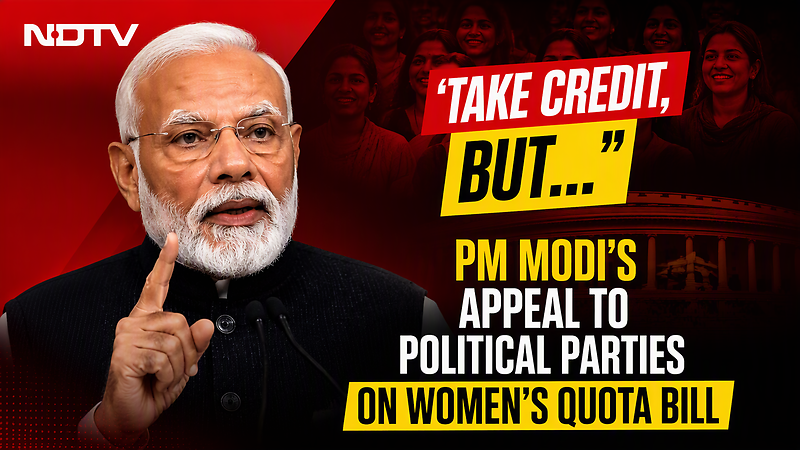
The push for a 33% women's reservation in Indian legislatures has reignited a heated debate, particularly regarding the necessity of linking its implementation to the census and delimitation processes. Prime Minister Narendra Modi, speaking through NDTV, emphasized the urgent need for women's representation, stating, "We have passed the Nari Shakti Vandan Adhiniyam for 33% women's legislative representation," and called on political parties to support this initiative without delay. He lamented that this goal has faced political obstacles for 40 years and urged parties to take credit for advancing women's rights.
Conversely, women's organizations are adamant that the reservation should not be contingent on the census or delimitation. In a video by The Wire, activists declared, "We are not asking for alms; we demand our rightful participation in policy-making." They argue that waiting for these processes would unnecessarily prolong the implementation of women's rights, with one activist stating that women's perspectives are crucial for addressing issues like inflation and gender-based violence. They assert that having women in Parliament will lead to policies that reflect their lived experiences and hardships.
The Congress party has also entered the fray, criticizing the BJP for delaying the notification of the Women's Reservation Bill, which was passed in 2023. A representative from India Today highlighted Congress's stance, stating, "Why link Women's Quota to Census?" They argue that this linkage serves only to delay progress, potentially pushing implementation back to 2034. Congress has called for the freezing of 543 seats to reserve one-third for women, emphasizing that they have consistently supported the quota.
In Tamil Nadu, discussions surrounding women's reservation echoed similar concerns. Another report from India Today noted that the Tamil Nadu Assembly debated women's reservation alongside an anti-delimitation resolution, illustrating regional tensions over the issue. Activists contend that linking women's reservation to these processes has caused unnecessary delays, further complicating an already contentious issue.
Anurag, a prominent figure discussed in India Today, advocated for an early Parliament session to pass the 33% reservation, blaming Congress for obstructing progress in previous sessions. He argued that women’s rights should be prioritized without waiting for census data or delimitation.
While there is a clear consensus on the need for women's representation, the debate reveals a deep divide over the conditions that should govern its implementation. Modi and Congress call for action, while women's organizations insist that the time for waiting is over. As discussions continue, the urgency for equitable representation remains at the forefront of political discourse in India.