The Debate Over Jammu and Kashmir Statehood: Voices for and Against
Nov 1, 2026, 17:30 IST
Summary
The debate over Jammu and Kashmir's statehood features contrasting perspectives. Iltija Mufti advocates for civil rights and protests against police force, while Omar Abdullah pushes for statehood. Conversely, Pavneet Singh argues that the abrogation of Article 370 has spurred development, and Aadi contends that statehood should not be restored, fearing negative consequences. The discourse highlights deep-rooted tensions and differing visions for the region's future.
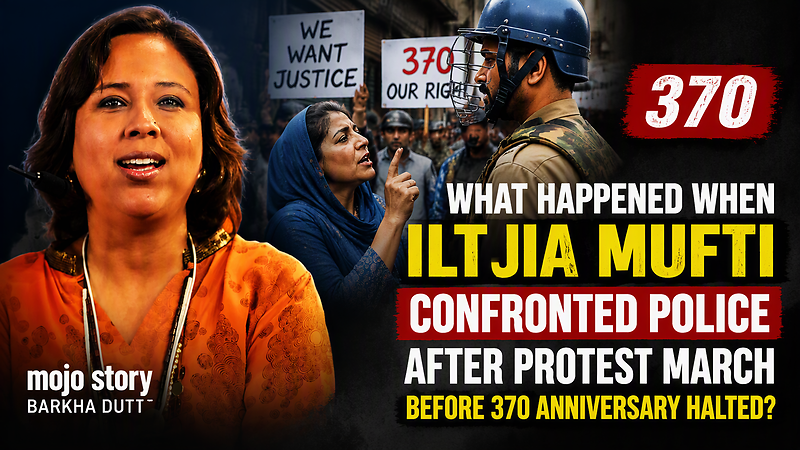
As discussions about the statehood of Jammu and Kashmir continue, various voices express differing perspectives on the matter. Iltija Mufti, a prominent figure in the region, recently confronted police during a protest march ahead of the Article 370 anniversary, claiming that the police used force to stop the demonstration. In her impassioned remarks, she stated, 'Kashmiris can protest without permission under the Constitution,' highlighting the struggle for civil rights in the region. This confrontation underscores the ongoing tension surrounding statehood, as many Kashmiris feel deprived of their rights.
In a parallel protest, Omar Abdullah, former Chief Minister of Jammu and Kashmir, was seen riding an auto-rickshaw through a demonstration in Delhi advocating for statehood. His presence at the protest signifies the political weight behind the demand for Jammu and Kashmir's reinstatement as a state, showcasing the urgency felt by many in the region.
Contrasting these views, Pavneet Singh, a commentator known for his critical take on regional politics, argues that the abrogation of Article 370 in 2019 has actually benefitted Kashmir's development. He claims that the Mufti and Abdullah families had historically obstructed the region's national integration and development. Singh asserts, 'Article 370 enabled Mufti and Abdullah families to obstruct Kashmir’s national integration,' suggesting that the recent changes have opened doors for progress and development in the area.
On the other hand, Aadi, a commentator who shares a more hardline stance, contends that statehood should not be restored to Jammu and Kashmir. He expresses his frustration over Abdullah's threats of unrest, stating, 'Jammu and Kashmir should not receive statehood, regardless of Abdullah family or opposition protests.' Aadi’s position highlights a belief that restoring statehood could replicate undesirable conditions seen in Pakistan-occupied Jammu and Kashmir.
These perspectives reveal a complex debate where calls for statehood are met with concerns about historical governance and development in the region. Iltija Mufti and Omar Abdullah represent a push for rights and recognition, while Pavneet Singh and Aadi challenge the efficacy of these calls, emphasizing the need for a more substantial change in governance. The conversation around Jammu and Kashmir statehood is not merely about political status; it intertwines with issues of civil rights, development, and the legacy of past leadership.
As the debate unfolds, it is clear that the question of statehood remains deeply divisive, with each voice contributing to a broader understanding of what the future may hold for Jammu and Kashmir. The wait for statehood may continue, but the discussions surrounding it are dynamic and evolving, reflecting the complex realities on the ground.