The Debate Over Sonam Wangchuk's Support for CJP
Sep 3, 2026, 07:05 IST
Summary
Sonam Wangchuk's support for the CJP movement has sparked a debate among content creators. Priya Jain emphasizes accountability in education and ecological concerns. Barkha Dutt advocates for solidarity fasting, while Prakhar Gupta highlights the emotional weight of youth suicides linked to systemic issues. Sanjay Dixit envisions Wangchuk as a potential leader, adding a political dimension to the discussion.
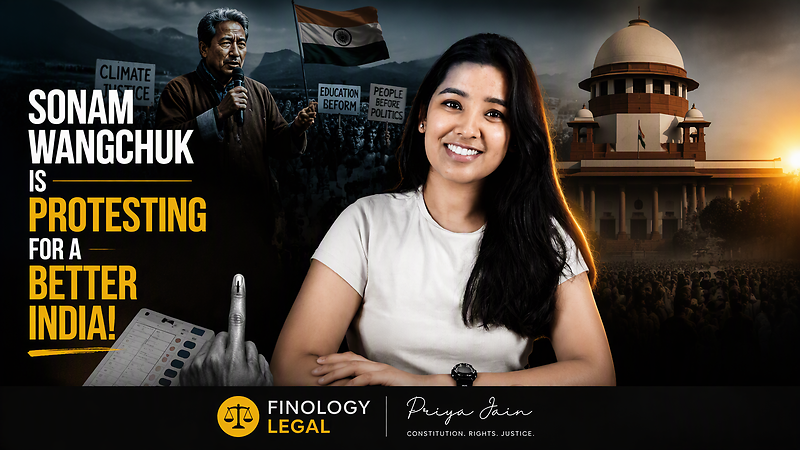
The recent support of Sonam Wangchuk for the Citizens for Justice and Peace (CJP) movement has sparked a lively debate among various content creators. Each voice brings unique perspectives on Wangchuk's motivations and the broader implications of his activism.
Priya Jain, a legal commentator from Finology, argues passionately for Wangchuk's cause. She highlights the systemic issues within India's education system, particularly focusing on the National Eligibility cum Entrance Test (NEET). Jain asserts that students face immense pressure, stating, 'Sonam Wangchuk is on hunger strike demanding accountability in India’s education system.' She connects this to broader ecological concerns, emphasizing that Wangchuk's sixth hunger strike seeks to protect the fragile ecosystems of Ladakh and the Himalayas. Jain's critique underscores the responsibility of citizens to challenge the status quo, suggesting that 'the whole country should not rely on just one person' to address these issues.
In contrast, Barkha Dutt, a prominent journalist, discusses the importance of solidarity in activism. In her viral video, she encourages supporters at Jantar Mantar to participate in one-day fasts, claiming that 'one-day fasting provides autophagy and ketosis benefits for healthy people.' Dutt's approach highlights the personal health benefits of fasting while simultaneously fostering a community of support for Wangchuk's cause. This perspective resonates with Jain's call for collective action, suggesting that both creators see value in community involvement but approach it from different angles.
Prakhar Gupta, a popular podcaster, adds another layer to the discussion by focusing on the tragic backdrop of Wangchuk's activism. He mentions that 'twenty children reportedly died by suicide; university records omit their names.' Gupta expresses support for investigating these deaths, framing Wangchuk's actions as part of a larger narrative of genuine concern for the youth of India. He emphasizes the need for moral legitimacy in activism, stating, 'Sonam lends his face and voice to CJP’s genuine concern.' This perspective aligns with Jain's emphasis on accountability but diverges in its focus on the emotional weight of the issue.
Gupta also notes the creative expression of youth in supporting CJP, describing it as a 'very creative expression of the youth of India.' He appreciates that the movement has not resorted to violence, framing it as a positive development. This complements Jain's call for systemic change, indicating a shared recognition of the need for innovative forms of activism.
Lastly, Sanjay Dixit from The Jaipur Dialogues proposes an intriguing notion about Wangchuk's potential as a national leader. He states, 'When intelligent people like Wangchuk enter politics, the country could earn global respect.' While Dixit admires Wangchuk's intellect and vision, he acknowledges that Wangchuk is not currently pursuing a political career, suggesting that the movement may need more leaders to emerge from the shadows.
In summary, the debate surrounding Wangchuk's support for CJP reveals a complex interplay of perspectives. While creators like Jain and Gupta emphasize accountability and the emotional stakes of activism, Dutt focuses on community involvement and health benefits, and Dixit envisions a future where Wangchuk could lead. This multifaceted discussion highlights the varying motivations and implications of Wangchuk's actions within the broader context of social justice and ecological preservation.