The Military Balance: India vs China in the Modern Era
Nov 1, 2026, 19:30 IST
Summary
The debate over military strength between India and China features diverse perspectives. Abhijit Chavda highlights India's strategic arms sales to China's neighbors as a means of leverage. Vinamre Kasanaa warns of India's technological gaps and emphasizes the need for stronger partnerships. Sandeep Deo questions India's military strength compared to China, reflecting a complex landscape of confidence and concern.
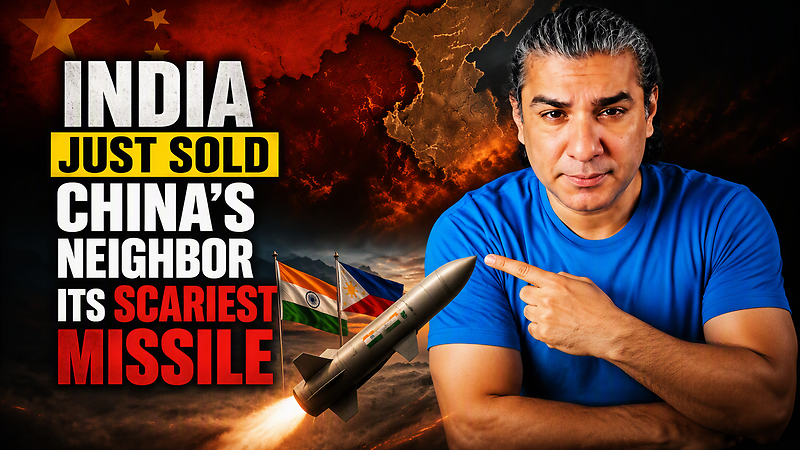
The ongoing debate over military strength between India and China has gained new dimensions with various perspectives emerging from content creators. Abhijit Chavda, a prominent commentator, emphasizes India's recent shift from being a major arms buyer to a supplier, specifically pointing out the sale of BrahMos missiles to China's maritime neighbors. He argues that this move is not merely about sales but a strategic effort to gain leverage against China, stating, "Arming China’s neighbors gives India leverage against Beijing’s pressure tactics." Chavda acknowledges that while Indonesia may only acquire a limited number of missiles, it serves as a deterrent, creating a sense of insurance against Chinese aggression.
In contrast, Vinamre Kasanaa, a popular Youtuber known for his analysis on military technology, raises concerns about India's preparedness for modern warfare. He argues that without comparable combat drones or robots, India risks being outmatched, suggesting that partnerships and domestic capabilities need strengthening. He notes, "We need to build partnerships to counter China," highlighting the importance of private sector involvement in defense. This perspective introduces a nuanced view that questions the effectiveness of current military strategies in the face of advancing technology.
Kasanaa further elaborates on the air power dynamics in another video, asserting that the Indian Air Force holds an advantage over its Chinese counterpart due to the number of operational airfields. He claims, "India has roughly 2.5–3 times more foothill and plains airfields than China," which he argues is critical for operational efficiency, particularly in high-altitude combat scenarios. This assertion supports a broader argument that, despite some technological gaps, India maintains certain strategic advantages in terms of infrastructure.
However, not all creators share this optimistic view. Sandeep Deo from India Speak Daily presents a more critical stance, suggesting that India’s army is not as strong as China’s. He reflects on the perception of fear towards China, stating, "India is portrayed as strong and unafraid of China," while also acknowledging the formidable intelligence capabilities of India. This perspective raises questions about the confidence within India’s military ranks, contrasting with the assertions made by Chavda and Kasanaa.
The debate illustrates a complex landscape where perspectives on military strength are not only shaped by quantitative assessments but also by perceptions of capability and preparedness. While Chavda focuses on strategic arms sales as a means of gaining leverage, Kasanaa warns of technological inadequacies, and Deo reflects on public perceptions of strength versus fear. Collectively, these voices underscore the multifaceted nature of the military balance between India and China, revealing both confidence and concern as the situation evolves.