The Reluctance of Indian Ministers to Resign: A Closer Look
Nov 2, 2026, 14:15 IST
Summary
The debate on why Indian ministers rarely resign highlights differing perspectives. Priya Jain argues that systemic issues, such as paper leaks, undermine accountability. Sarthak Goswami insists that authorities must admit problems to ensure accountability, while Sanjay Rajoura emphasizes the need for politicians to recognize their failures amid protests. Together, they explore the complexities of ministerial responsibility.
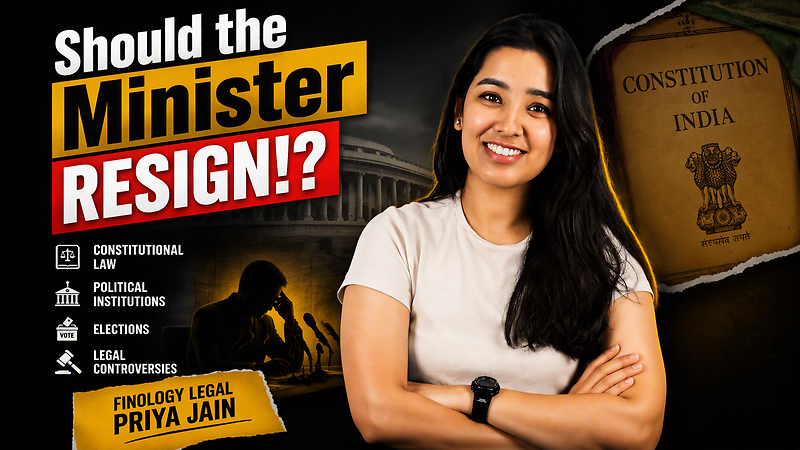
The question of why Indian ministers rarely resign, even amid scandals, has sparked significant debate among content creators. Priya Jain, a legal expert and YouTuber, argues that the issue of paper leaks in education is systemic and not limited to any single party. In her video, she states, 'India recorded 220 documented paper leaks between 2005 and 2026,' emphasizing that such incidents have occurred under various governments, including BJP, Congress, SP, and BSP. She critiques the idea that changing ministers will lead to accountability, asking, 'Does just changing names mean the work will also change?' Jain highlights that despite strict anti-leak laws, the enforcement remains weak, with zero convictions in CBI cases since 2015.
In contrast, Sarthak Goswami, a popular YouTuber, focuses on the need for accountability from authorities. He asserts that without admitting problems, solutions cannot be discussed. He argues, 'If you don’t admit the problem, accountability doesn’t come into play,' referencing the education ministry's reluctance to acknowledge ongoing issues. Goswami draws a parallel with food safety, stating that officials should ensure safety rather than shifting the responsibility onto consumers. His perspective suggests that the education ministry's failure to address its shortcomings contributes to the broader issue of ministerial accountability.
Adding another layer to the discussion, Sanjay Rajoura, a popular YouTuber, highlights the protests by NEET students demanding accountability from the education ministry. He notes that these protests reflect a demand for fair examinations and the right to education, stating, 'The protesters are advocating for the future of the country.' Rajoura criticizes Indian politicians for treating their positions as permanent, claiming they believe 'once they reach the chair, they can never leave.' He references the UK Prime Minister's resignation as a stark contrast to Indian leaders, who seem to lack a sense of accountability.
While Jain emphasizes the systemic nature of issues leading to paper leaks, Goswami and Rajoura focus on the urgent need for ministers to acknowledge their failures. There is a shared understanding among the creators that without accountability, the cycle of negligence will continue. However, their approaches differ, with Jain advocating for structural changes in enforcement, while Goswami and Rajoura demand immediate recognition of problems and ministerial resignations. The debate illustrates a critical tension in Indian politics: the expectation of accountability versus the reality of political survival, raising the question of whether a shift in perspective could lead to meaningful reform in governance.