The UN's Relevance in a Multipolar World: A Divided Debate
Nov 3, 2026, 09:30 IST
Summary
The relevance of the United Nations in a multipolar world sparks a lively debate. Barkha Dutt critiques non-market forces hindering developing countries, while Khanversation questions the UN's effectiveness amidst ongoing conflicts. Perspectives on US unilateralism and India's aspirations for reform highlight the institution's challenges, reflecting a complex dialogue about the UN's future in global governance.
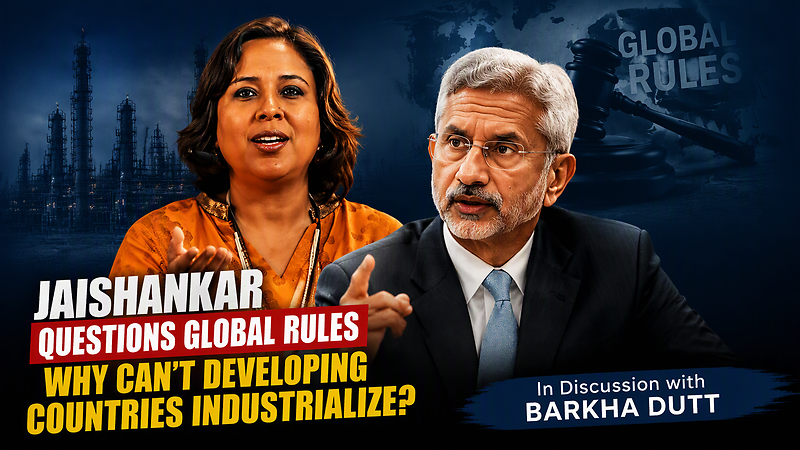
As global power dynamics shift towards a multipolar world, the relevance of the United Nations (UN) has come under scrutiny from various commentators. The debate encapsulates a range of perspectives, reflecting concerns about the UN's effectiveness and the changing nature of international relations.
Barkha Dutt, from Mojo Story, argues that non-market forces are obstructing the natural evolution of the international economy, particularly affecting developing countries. In her video, she asserts that these nations are being denied the right to industrialize due to manipulated competitiveness and restricted market access. This view highlights a critical aspect of the UN's limitations: its inability to facilitate genuine economic growth for these countries.
Conversely, the Khanversation original channel raises fundamental questions about the UN's current significance. In one video, they emphasize the failures of the UN in maintaining peace, pointing to ongoing genocides and civil wars as evidence of its diminishing role. They note that during the 81st session of the General Assembly, the absence of key leaders like Xi Jinping, Vladimir Putin, and Narendra Modi raises further doubts about the institution's authority and relevance in today’s geopolitical landscape.
The channel also explores why these leaders have opted out of the General Assembly, suggesting that the RIC (Russia, India, China) mechanism has become a more effective platform for discussing global norms. This absence signals a potential shift towards alternative forms of international dialogue that bypass traditional UN frameworks.
Adding to this critique, another perspective from Khanversation discusses Donald Trump’s contradictory relationship with the UN. They highlight how Trump sought UN Security Council approval for his Peace Council while simultaneously undermining the institution’s authority. This paradox illustrates a broader trend of unilateralism that has been increasingly evident in US foreign policy, which some argue has contributed to the UN's declining influence.
Dr. Qamar Cheema from Global Politics also critiques the UN's effectiveness, specifically regarding India's aspirations for a permanent Security Council seat. He argues that India’s push for reform within the UN reflects a broader recognition of its declining influence, particularly when Prime Minister Modi's absence from the General Assembly delayed India's voice on critical issues like terrorism and regional stability.
In contrast, Shubhankar Mishra offers a nuanced view of the UN's operational limitations, arguing that the organization lacks an army and relies on member states' support. This dependency means that powerful nations can often act unilaterally, diminishing the UN's effectiveness in resolving conflicts. He underscores that while the UN can facilitate dialogue among smaller nations, it struggles to assert authority over more dominant states, such as the US.
Ultimately, the debate reveals a complex tapestry of opinions regarding the UN's role in a multipolar world. While some creators express skepticism about its relevance and effectiveness, others highlight the necessity for reform and adaptation to meet contemporary challenges. The dialogue underscores a critical juncture for the UN as it navigates its future amid shifting global power dynamics.