Uniform Civil Code: A Unified Law or a Political Dog-Whistle?
Oct 28, 2026, 19:00 IST
Summary
The debate over the Uniform Civil Code (UCC) highlights competing views on equality and political motivations. Proponents like Priya Jain advocate for standardized laws across communities, while critics such as Sanjay Dixit and Faye D'Souza argue it targets minorities and serves political agendas. As states move toward implementation, the discussion reflects broader societal tensions.
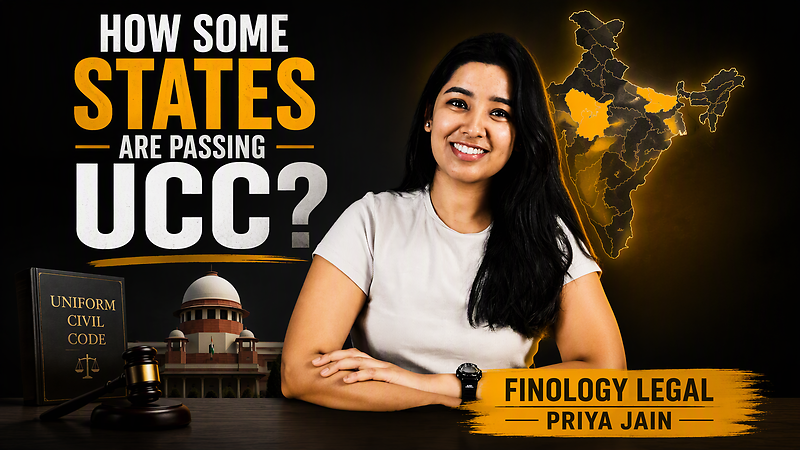
The debate over the implementation of a Uniform Civil Code (UCC) across all NDA-ruled states by 2029 is rife with tension and differing opinions. Proponents argue for equality in family laws, while critics see it as a politically motivated move targeting minorities.
Popular Youtuber Priya Jain from Finology Legal explains that the UCC, which aims to standardize laws regarding marriage, divorce, and inheritance across communities, is gaining traction with states like Madhya Pradesh passing bills for its implementation. Jain asserts, "Madhya Pradesh became the fourth state to pass the UCC bill, which means laws will apply equally regardless of religion. This includes mandatory monogamy and compulsory marriage registration."
In a similar vein, Aadi from Def Talks announces that West Bengal is set to table its UCC in parliament, indicating a broader trend among states moving towards the code. "If you see, states like Uttarakhand, Gujarat, and Assam have already implemented it, and now West Bengal is following suit," Aadi states, suggesting a growing momentum for UCC adoption.
However, not all voices support this initiative. Sanjay Dixit from The Jaipur Dialogues argues that the UCC is being used by the BJP to target Indian Muslims specifically, claiming, "This is not about equality; it's about undermining minority rights under the guise of uniformity." He references constitutional articles that protect religious freedoms, stating that the UCC could infringe on these rights.
Faye D'Souza echoes this sentiment, suggesting that the UCC serves as a 'dog-whistle' for political agendas. She cites RJD leader Manoj Kumar Jha, who criticizes the government’s focus on UCC while neglecting pressing issues like employment and education. "Young protesters are not rallying for UCC; they want better opportunities and an honest examination system," she argues.
In contrast, Nitish Rane, a BJP leader, insists that the UCC is a commitment made to voters in Maharashtra, asserting that it will be implemented in accordance with the Constitution. He states, "The UCC aligns with the principles laid out by Dr. B.R. Ambedkar and is a promise we intend to fulfill."
Shubhankar Mishra presents a nuanced view, questioning the feasibility of a uniform code given India's diverse communities. He highlights the existing internal rules that complicate the implementation of a singular law, while also pointing out that the government has yet to present a draft for public discussion, raising concerns about transparency.
The conversation around UCC is not just about legalities; it also touches on identity and cultural significance. Javed Akhtar’s recent comments suggest that critics of the UCC often accept common civil laws abroad but oppose similar standards in India, highlighting a perceived hypocrisy in their arguments. Dixit further emphasizes this point, stating, "If equality is the goal, then why is there resistance to UCC in India?"
As the deadline for implementing the UCC approaches, the debate continues to reveal deep divisions in Indian society regarding the balance between uniformity in law and the preservation of cultural identity. With proponents arguing for equality and critics warning against potential marginalization, the path forward remains contentious and fraught with implications for the future of Indian civil rights.