Vishwaguru Diplomacy: Genuine Influence or Just a Brand?
Nov 24, 2026, 19:58 IST
Summary
The debate on India's 'Vishwaguru' diplomacy reveals contrasting views. Veteran diplomat Vivek Katju argues that Modi's efforts are undermined by trade deficits and past U.S. tariffs. In contrast, Rahul Gandhi criticizes Modi's reliance on personal friendships with global leaders, asserting that effective diplomacy requires more substantial engagement. This tension raises questions about India's true global influence.
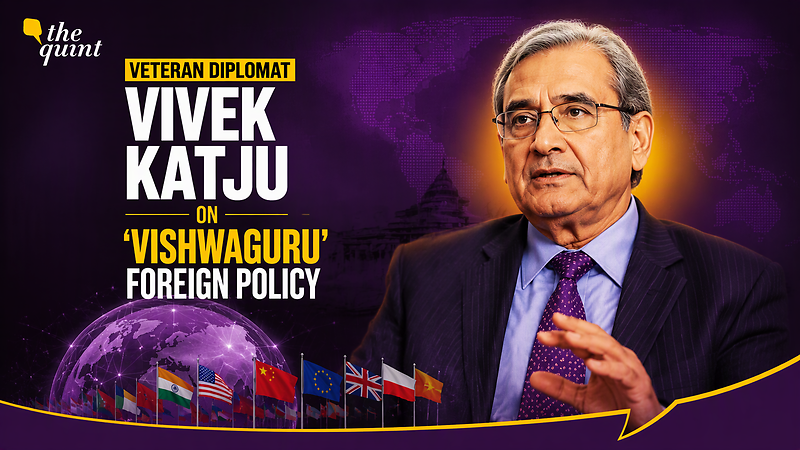
The debate surrounding India's 'Vishwaguru' diplomacy is heating up, with contrasting views on whether it signifies genuine global influence or merely serves as a branding exercise. Veteran diplomat Vivek Katju, speaking with The Quint, highlights the complexities of India's trade relationships. He argues that while Prime Minister Narendra Modi's government has made strides in foreign relations, Donald Trump's tariffs have undermined bipartisan American support for India, stating, 'Donald Trump’s tariffs weakened bipartisan American support for the India-US relationship.' Katju emphasizes that India runs deficits with 19 of its 25 largest trading partners, pointing out that 'India’s top 25 trading partners generate roughly $330 billion deficit excluding hydrocarbons.' This, he suggests, indicates that despite Modi's diplomatic efforts, India still struggles to establish robust economic ties with many nations.
On the other hand, Congress leader Rahul Gandhi offers a critical perspective on Modi's approach to international relations. In a discussion with India Today, he asserts that 'geopolitics do not work due to friendships.' Gandhi challenges the notion that personal camaraderie with global leaders is sufficient for effective diplomacy, arguing, 'Diplomacy and foreign relations require substance beyond personal camaraderie.' He criticizes Modi’s reliance on friendships, suggesting that they do not translate into meaningful geopolitical advantages. This stance presents a stark contrast to Katju’s more optimistic view on Modi’s diplomatic outreach.
Both perspectives underscore a fundamental disagreement on the nature of diplomacy. While Katju sees potential in Modi’s foreign policy initiatives, Gandhi remains skeptical, calling for a more substantial basis for India's international relations. This divergence raises questions about the effectiveness of Modi’s approach and whether it can yield the desired global influence.
The discourse reflects broader concerns about how India positions itself on the world stage. Katju’s analysis suggests that while there are diplomatic successes, economic realities complicate the narrative of India's rise as a global power. In contrast, Gandhi's critique urges a reevaluation of Modi's strategies, advocating for a focus on substantial policies rather than superficial relationships.
As the debate unfolds, it becomes clear that the future of India's 'Vishwaguru' diplomacy hinges not only on personal connections but also on the ability to forge meaningful economic and political alliances. The contrasting views from Katju and Gandhi highlight the complexities involved in navigating modern geopolitics, raising important questions about what it truly means for India to assert itself as a global leader.