Water Tensions: India, Pakistan, and the Indus Waters Treaty
Sep 2, 2026, 04:00 IST
Summary
The debate over water rights between India and Pakistan reveals conflicting perspectives. Barkha Dutt argues that terrorism underlies the water crisis, while Arfa Khanum Sherwani emphasizes Pakistan's governance issues. Dr. Qamar Cheema highlights international opposition to India's unilateral actions, contrasting with Engineer Reveals' ridicule of Pakistan's position. The complexity of national security and geopolitics underpins this contentious issue.
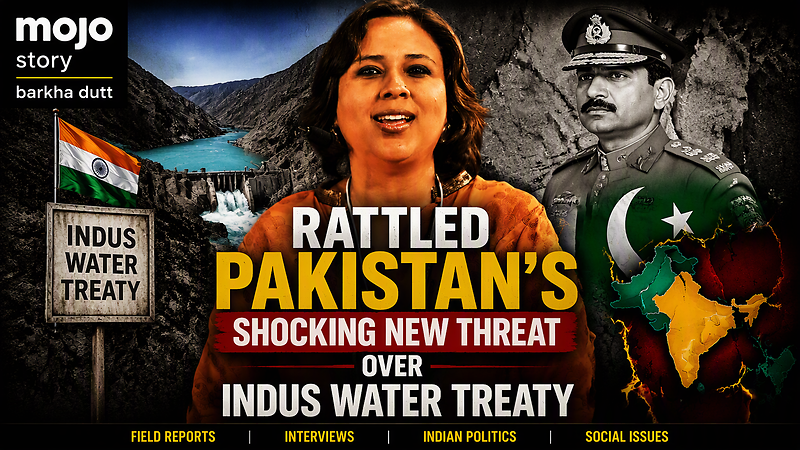
As tensions escalate over water rights between India and Pakistan, various voices present conflicting perspectives on the implications of the Indus Waters Treaty and the role of external influences, particularly China. Barkha Dutt, a prominent journalist, emphasizes that while Pakistan faces a severe water crisis, the real issue is terrorism. In her analysis, she argues that "serious India-Pakistan dialogue depends on Pakistan ending terrorism," suggesting that until Pakistan addresses this fundamental problem, discussions about water will remain stalled. She highlights that strict enforcement of the treaty could lead to a catastrophic water crisis for Pakistan, particularly in regions like Sindh and Balochistan, where canal shortages are reported to reach 60-80%.
On the other hand, Arfa Khanum Sherwani, a popular commentator, points out that Pakistan has significant economic opportunities as a regional player, yet struggles with governance issues. She questions why Pakistan has not leveraged its geopolitical position to ensure stability and argues that the ongoing water disputes reflect deeper issues of governance rather than mere resource scarcity. In her view, Pakistan's leadership must address its internal weaknesses to navigate its external challenges effectively.
Sherwani further explores the implications of a potential water war, suggesting that such a conflict could draw in China, given its strategic interests in the region. She argues that the suspension of the Indus Waters Treaty, justified by India as a response to terrorism, raises questions about fairness and equity in the relationship between the two countries. This viewpoint is echoed by Dr. Qamar Cheema, who notes that an arbitration statement from the Hague asserts that India cannot unilaterally stop Pakistan's water flow. He reinforces this by stating that international bodies, including the World Bank and the United Nations, would likely oppose any such action from India, thereby complicating the situation further.
In stark contrast, the YouTuber Engineer Reveals takes a more dismissive stance towards Pakistan's claims. He ridicules the threats made by Pakistan's climate minister regarding cutting hands of those who block water, suggesting that Pakistan's leadership is in a position of weakness, begging for water while facing accusations of terrorism. He cites India’s firm position that water will not be supplied until Pakistan ceases its support for terrorist activities, implying that Pakistan's historical claims of military victories are irrelevant in the current context.
Lastly, Cheema emphasizes the critical nature of water as a political weapon, asserting that Pakistan's military leadership, particularly General Asim Munir, has made it clear that any threats to Pakistan’s water supply will be met with strong resistance. He highlights the strategic importance of water and warns that any aggressive actions from India could lead to severe consequences.
Overall, the debate illustrates a complex interplay of national security, governance issues, and the geopolitical landscape, with each voice contributing unique perspectives on the ongoing water crisis between India and Pakistan.