Where Criticism Crosses the Line: Attacks on the CEC
Sep 25, 2026, 04:00 IST
Summary
The debate on personal attacks against Chief Election Commissioner Gyanesh Kumar highlights sharp divides among content creators. Supriya Shrinate condemns alleged electoral malpractice as treason, while Barkha Dutt demands accountability for deleting millions of voter records. Meghnad S. critiques Kumar's unilateral decision-making. The discourse raises questions about the balance between legitimate criticism and personal attacks in a democratic context.
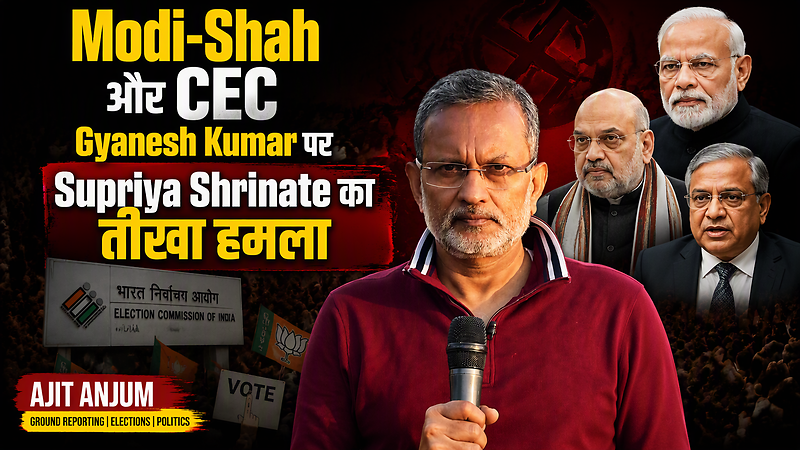
The debate surrounding personal attacks on Chief Election Commissioner Gyanesh Kumar has intensified, with various content creators voicing strong opinions on whether criticism has crossed the line into unwarranted personal attacks. Supriya Shrinate, a prominent political commentator, has been particularly vocal, arguing that the Election Commission's actions amount to treason against the country. In her view, the opposition should mobilize against the Election Commission for its alleged role in vote theft, stating, 'Voting rights were deliberately and fraudulently taken from citizens.' She believes that the actions of Narendra Modi and Amit Shah will ultimately lead to electoral consequences, asserting, 'People will respond to this treason in the elections to come.'
In another video, Shrinate escalates her criticism, declaring that Gyanesh Kumar has committed an 'unforgivable crime' by failing to ensure free and impartial elections. She accuses him of being a puppet for the ruling party, stating, 'You have become a puppet of one person and political party.' Her remarks highlight a broader concern that Kumar's tenure is marked by complicity in electoral malpractice, echoing Rahul Gandhi's warnings about vote theft.
Mojo Story's Barkha Dutt also shares a similar sentiment, emphasizing the gravity of the situation. She argues that deleting approximately 140 million voter records constitutes a 'criminal attack on democracy' and calls for accountability, stating, 'Election commissioners should not receive legal immunity for unlawful manipulation of electoral records.' Dutt's perspective reinforces the idea that the integrity of the electoral process is under threat, and those responsible must be held accountable.
On the other hand, Meghnad S. critiques Kumar's handling of electoral processes, suggesting that he has engaged in gaslighting by making unilateral changes to voter registration procedures without proper consensus from other commissioners. He highlights a specific instance where Kumar allegedly changed Form 6 requirements, stating, 'Gyanesh Kumar unilaterally decided to make a change in the Form 6 which is new voter registration.' This critique points to a broader concern about transparency and the decision-making process within the Election Commission.
Despite the sharp criticisms, some voices call for a measured approach. While Shrinate and Dutt emphasize the need for accountability and the consequences of alleged malpractice, others urge caution, suggesting that while the criticisms may be warranted, personal attacks could undermine the legitimacy of the claims.
Overall, the debate illustrates a deep divide among content creators regarding the line between legitimate criticism and personal attacks. As accusations of electoral manipulation circulate, the discourse continues to evolve, with each creator bringing unique insights into the implications for India's democracy. The personal stakes involved in this debate raise important questions about the balance between holding public officials accountable and respecting the dignity of their office.