Yemen War: Military Victory or Negotiated Peace?
Oct 30, 2026, 10:00 IST
Summary
The debate over the Yemen war focuses on whether military victory or negotiations with the Houthis is preferable. Khanversation emphasizes the historical roots of the conflict and the need for military intervention due to the exclusion of the Zaidis. In contrast, Dr. Qamar Cheema argues for negotiations, proposing financial incentives to cease hostilities, highlighting a divide in approaches to peace.
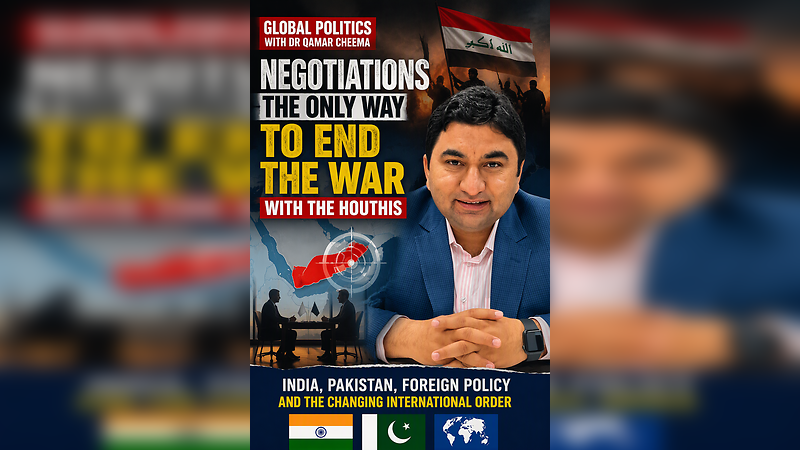
As the conflict in Yemen continues to draw international attention, the debate intensifies over whether a military victory or negotiations with the Houthis is the most viable path forward. Two distinct perspectives emerge from influential content creators on this topic.
Khanversation, a YouTube channel focused on global issues, outlines the historical context of the Yemen war in their video, "Why the Yemen war began — roots and timeline." The creator argues that the roots of the conflict can be traced back 30 years, with the war itself beginning in 2015 when Saudi Arabia launched a US-backed air campaign against the Houthis. This military action, according to Khanversation, was fueled by the political and economic exclusion of the Zaidis, a group constituting about 40% of Yemen's population. The video highlights that the conflict, which was initially perceived as a quick military operation, has instead led to years of fighting, culminating in a truce in 2022.
In contrast, Dr. Qamar Cheema, a prominent political analyst on YouTube, presents a different viewpoint in his video titled "Negotiations the Only Way to End the War with the Houthis." He criticizes the unilateral decision-making of Saudi Crown Prince Mohammed bin Salman (MBS), arguing that the lack of a strategic consultation process hampers effective foreign policy. Cheema posits that Saudi Arabia's reliance on foreign consultants rather than developing its own strategic culture has contributed to the ongoing conflict. He advocates for negotiations with the Houthis, suggesting that offering them $5 billion could lead to a cessation of hostilities, stating, "We will not attack you. We will not fund the Yemeni army. And that's it."
While both creators acknowledge the complex historical and political landscape of the Yemen war, they diverge sharply in their proposed solutions. Khanversation emphasizes the importance of understanding the conflict's roots and the exclusion of the Zaidis, which he believes necessitates a military approach to restore balance. On the other hand, Cheema stresses the urgency of negotiations, indicating that financial incentives could pave the way for peace.
The disagreement between these perspectives reflects a broader debate about the effectiveness of military intervention versus diplomatic solutions in conflict resolution. Cheema's call for negotiations starkly contrasts with Khanversation's historical analysis, suggesting that without addressing the underlying political issues, any military victory may only be temporary.
As the situation in Yemen remains precarious, the discussions around military action versus negotiation continue to evolve, highlighting the need for a multifaceted approach that considers both historical grievances and the potential for diplomatic resolutions. The future of Yemen may well depend on finding a middle ground that acknowledges the complexities of its social and political fabric.