Yogi's UP: Safer Streets or Political Claims?
Nov 26, 2026, 22:30 IST
Summary
The debate on Yogi Adityanath's governance in Uttar Pradesh centers on whether improvements in law and order are genuine or politically motivated. Sanjay Dixit argues that women now travel safely at night, citing improved law enforcement, while critics question the sustainability of these changes, suggesting they may mask deeper issues. The discourse reflects broader tensions in Indian politics.
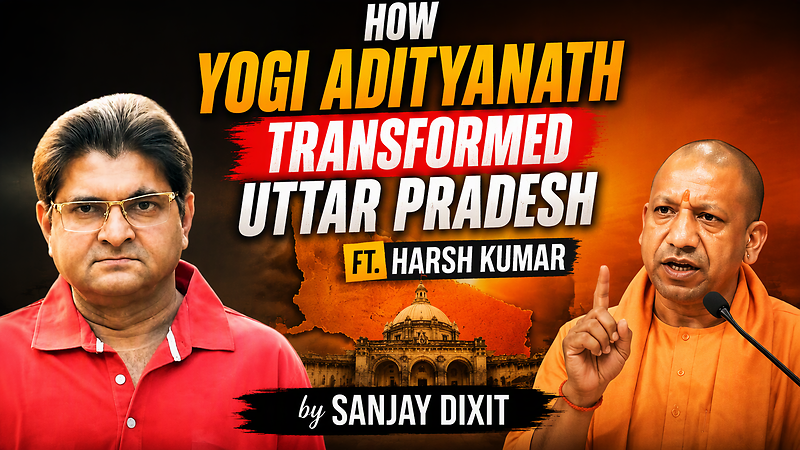
The debate surrounding Yogi Adityanath's governance in Uttar Pradesh (UP) has ignited discussions about whether improvements in law and order are genuine achievements or mere political claims. Prominent voices in this discussion include Sanjay Dixit, a popular YouTuber, who argues passionately in favor of the current administration's impact on safety and security in the state.
Dixit contends that under Yogi Adityanath, law and order in UP has significantly improved, providing residents, especially women, with newfound freedom to travel safely at night. He cites viral videos of women expressing their confidence to ride scooters alone after dark as evidence of this transformation. "Women in Uttar Pradesh report greater freedom to travel safely at night," he asserts. He also contrasts the current climate with previous years marked by violence and unrest, noting, "Muzaffarnagar, Deoband, and Saharanpur reportedly experienced frequent curfews earlier."
However, the validity of these claims is not universally accepted. Critics argue that the perceived safety may be overstated or politically motivated. They question whether the improvements in law and order are genuine or simply a narrative crafted for electoral gains. This skepticism is echoed in various discussions surrounding Adityanath's administration, which some view as focusing more on creating a political image than on addressing underlying issues.
Dixit further emphasizes that the current administration's efforts to improve safety are part of a broader strategy to enhance UP's overall governance. He claims, "Yogi Adityanath is considered India’s top chief minister because Uttar Pradesh’s law enforcement improved," attributing the state's development to the removal of encroachments and an end to mafia rule. He maintains that the security environment in UP has reached a level unmatched elsewhere in India, asserting, "The security atmosphere in Uttar Pradesh is ultimate, which has not been seen anywhere else in the country."
Yet, the debate does not rest solely on anecdotal evidence or personal experiences. The question remains whether these improvements are sustainable or if they mask deeper issues that could resurface. Critics of the current government suggest that while some aspects of law and order have improved, other socio-economic factors remain unaddressed, which could undermine long-term stability. They argue that focusing exclusively on safety ignores the need for comprehensive development strategies that encompass education, health, and economic growth.
As this debate unfolds, it reflects a broader tension in Indian politics—balancing the narrative of progress against the realities faced by citizens on the ground. The perspectives presented by Dixit and others illustrate the complexity of evaluating governance in UP, where safety is a critical concern but is intertwined with political narratives and electoral strategies. The question of whether Yogi Adityanath's administration is genuinely creating safer streets or merely promoting a political claim remains open, inviting further scrutiny and discussion.