Can Indian Football Overcome ISL's Collapse and AIFF Chaos?
Nov 24, 2026, 14:00 IST
Summary
As Indian football grapples with ISL's financial turmoil and AIFF's mismanagement, voices like Prakhar Gupta and Ranjit Bajaj emphasize the need for a strong youth development system and bold plans for the future. Faye D'Souza criticizes the AIFF's priorities, while Nikhil Naz highlights financial instability. Jamshedpur FC's withdrawal adds urgency to the debate about the sport's survival.
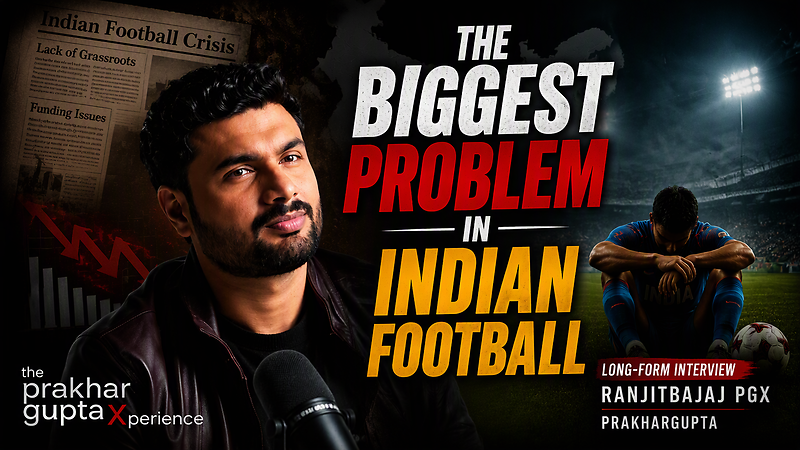
The future of Indian football hangs in the balance as the Indian Super League (ISL) faces significant turmoil, prompting various content creators to voice their opinions on whether the sport can be salvaged. Popular YouTuber Prakhar Gupta argues that a strong developmental pipeline is crucial for India's ambitions on the global stage. In his first video, he emphasizes that 'India's senior World Cup ambitions depend on strong Under-17-to-Under-20 development,' pointing to Uzbekistan's success in youth tournaments as a model to emulate. Gupta insists that without a robust youth system, aspirations for the senior team are unrealistic.
Ranjit Bajaj, another prominent figure in the debate, boldly claims he can lead India to the World Cup by 2036, regardless of external support. In his video, he states, 'If I get help, I'll deliver it sooner. If I don't get help, I'll still deliver it.' His confidence contrasts sharply with the current state of Indian football, where financial issues plague clubs. He also stresses the importance of developing players who can compete at elite levels, asserting that 'India will not qualify until ten Indian players compete in the Champions League.'
Faye D'Souza critiques the All India Football Federation (AIFF) for prioritizing a costly friendly match against Brazil over participation in the inaugural FIFA ASEAN Cup. She argues that 'the timing is completely wrong' given the financial struggles of ISL clubs and calls for a focus on crucial tournaments instead. Her concerns about mismanagement resonate with Nikhil Naz, who highlights the chaotic state of Indian football and the financial unsustainability of league investments. He points out that even top clubs are losing money, citing Parth Jindal's alarming statement about annual losses of ₹25 crore in the ISL.
The debate deepens with the news of Jamshedpur FC's withdrawal from the ISL, a decision that has left players and fans shocked. Nikhil Naz describes this move as a 'huge wakeup call,' given that Jamshedpur FC is backed by the Tata Group, traditionally a supporter of Indian football. Sunil Chhetri's emotional plea to the club's owners underscores the urgency of addressing the financial crisis plaguing the league.
Meanwhile, Boria Majumdar offers a glimmer of hope, suggesting that the upcoming season will see a 'huge upward shift' in Indian football as club owners take control of the league. He believes this shift could lead to more cohesive efforts to improve the sport, although skepticism remains about whether these changes can address the underlying issues.
Ultimately, the question remains: can Indian football rise from the ashes of ISL's collapse and AIFF chaos? With perspectives ranging from hopeful ambition to stark realism, the path forward is fraught with challenges but not devoid of potential solutions.