Consistency vs. Horses-for-Courses: The Indian Cricket Selection Debate
Oct 29, 2026, 12:30 IST
Summary
The debate over Indian cricket selection intensifies as Vikrant Gupta discusses the precarious position of Sanju Samson against rising talents like Vaibhav Suryavanshi. Nikhil Naz raises concerns about board interference in selections, while Abhinav Mukund emphasizes the need for a balance between experience and fresh talent. The discussion highlights the tension between consistency and adaptability in the selection process.
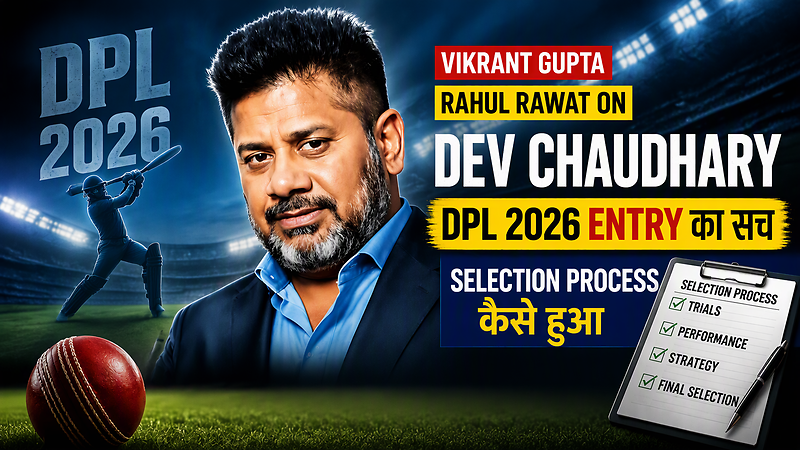
The debate surrounding the Indian cricket selection process intensifies as content creators weigh in on the tension between consistency and fairness versus a horses-for-courses approach. Vikrant Gupta, a popular sports commentator, highlights the challenges faced by selectors when deciding on players like Sanju Samson, Sarfaraz Khan, and Devdutt Padikkal, amidst calls for a more transparent and fair selection process.
Vikrant Gupta argues that Sanju Samson's position is precarious as he faces increasing competition from up-and-coming players like Vaibhav Suryavanshi. He states, "Sanju Samson has already proven that he is a match-winner... but now it comes down to how much leeway you give someone." Gupta expresses concern that if Samson underperforms in upcoming matches, he may lose his spot to others like Suryavanshi, who are making a strong case for selection.
Adding to the complexity, Nikhil Naz, a sports journalist, raises questions about the influence of DDCA board members on the selection process. He reports that allegations of board members attempting to interfere in selection meetings have surfaced, suggesting that the selection process may not be as fair as it should be. Naz claims, "The director who has raised the issue mentioned that inaction could lead to a formal complaint with the BCCI."
In contrast, Abhinav Mukund emphasizes the importance of selecting players based on current form and performance, particularly highlighting the return of established players like Rohit Sharma and Virat Kohli. He asserts that selectors must balance experience with the need to give fresh talent a chance, stating, "Selectors have been busy... but it's going to be a busy next couple of months for our boys in blue."
Vikrant Gupta further explores the selection of bowlers, particularly Mohammed Shami, who has faced exclusion despite a strong performance history. Gupta argues, "Mohammed Siraj is a senior Indian player now... you can't treat Mohammed Siraj like this," suggesting that Shami’s exclusion may be a result of inconsistent selection policies.
The conversation shifts to the implications of these decisions on players like Devdutt Padikkal, who is being groomed as a potential star. Gupta notes, "Devdutt Padikkal will be the vice-captain of the India A side... this could be the test before they go to New Zealand," indicating the selectors' willingness to invest in young talent while also considering the need for immediate performance.
Meanwhile, Boria Majumdar mentions that Ajit Agarkar, the chief selector, is in Colombo with the team, emphasizing the need for clear strategies as the team prepares for upcoming matches. He points out that the selectors must establish a plan for players who may not fit into the current framework, especially as the World Cup approaches.
As the debate unfolds, it is clear that there is a significant division among content creators regarding the best approach to selection. While some advocate for consistency and trust in established players, others push for a more dynamic and responsive strategy that prioritizes current form and adaptability. The upcoming matches will undoubtedly test these theories and the selectors' ability to balance tradition with innovation in the ever-evolving landscape of Indian cricket.