Gambhir vs Agarkar: Who Holds the Real Power in Team Selection?
Nov 25, 2026, 16:11 IST
Summary
The debate over who influences Team India's selection—Gautam Gambhir or Ajit Agarkar—features varied perspectives. Vikrant Gupta argues against scapegoating individuals like VVS Laxman, while Nikhil Naz emphasizes the need for selectors' autonomy. Both agree on the negative impact of BCCI interference, and they highlight the shared responsibility in team decisions, challenging narratives of rivalry.
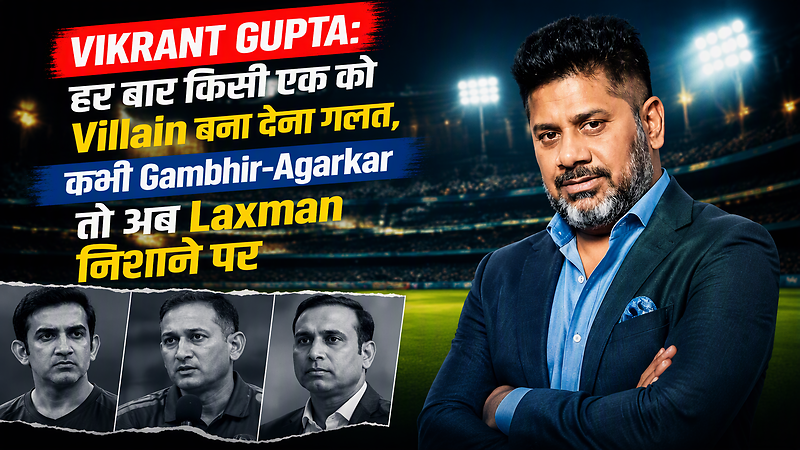
The debate surrounding who truly influences Team India's selection—Gautam Gambhir or Ajit Agarkar—has gained traction, with various voices weighing in on the matter. Popular YouTuber Vikrant Gupta argues that blaming individual figures like VVS Laxman or Agarkar for team losses is misguided. He emphasizes that injuries and performance issues stem from a broader neglect of sports medicine in Indian cricket. Gupta states, "VVS Laxman should not alone bear blame for team losses or injuries," highlighting the shared responsibility among selectors, coaches, and players.
In contrast, fellow content creator Nikhil Naz asserts that the selectors, including Agarkar, are best qualified to make team decisions without interference from the Board of Control for Cricket in India (BCCI). He argues, "No one within the BCCI is more qualified than the selectors to decide which team should be chosen," warning that any interference undermines the integrity of Indian cricket.
Naz further explores recent controversies, including a perceived dig from Rohit Sharma at Agarkar through his choice of attire, which fans interpreted as a commentary on Agarkar's non-committal stance regarding players' futures. This incident underscores the tensions within the team and the selectors, as Naz notes that Agarkar's statements about player commitments have been scrutinized.
Adding to the complexity, Gupta insists that player selections are not solely at the discretion of the chief selector. He claims, "It's not like Ajit Agarkar was the only one with questions," emphasizing that decisions involve the captain and coach as well. This aligns with Naz's assertion that BCCI's administrative comments often undermine the selectors' authority, which he believes should remain intact.
Both Gupta and Naz agree on the detrimental effects of BCCI's interference. Naz criticizes the BCCI secretary for undermining the selectors' authority, suggesting that such comments create confusion and conflict. Gupta echoes this sentiment, indicating that external pressures from the BCCI led to controversial selection decisions, such as dropping Sanju Samson despite the coach and captain's preferences.
Interestingly, Naz points out that Agarkar has been unfairly labeled as anti-Rohit Sharma and Virat Kohli, noting that it was Agarkar who facilitated their return for the 2024 T20 World Cup. He argues that Agarkar's judgments about players' utility are part of a selector's role, emphasizing that these decisions should not be simplified into rivalries.
In a similar vein, Naz highlights that Gambhir and Agarkar often found common ground on issues such as injury management and BCCI interference. He notes, "Gautam Gambhir and Ajit Agarkar reportedly agree on injury-management concerns," suggesting that their alignment on these issues challenges the narrative of conflict between them.
Ultimately, the debate reflects a larger issue of accountability and transparency in Indian cricket. As different voices present their perspectives, it becomes clear that the selection process is influenced by multiple stakeholders, and the narrative of a singular villain is overly simplistic. The truth lies in the complexities of collaboration, responsibility, and the need for a cohesive approach to team selection in Indian cricket.