India's Asian Games 2026: Progress or Plateau?
Nov 5, 2026, 21:03 IST
Summary
The debate on India's performance at the Asian Games centers on whether the medal haul signifies progress or a plateau. Boria Majumdar argues for evaluating Olympic-discipline medals, highlighting growth in athletics. In contrast, Faye D'Souza emphasizes the recognition of athletes as indicators of India's rising status in global sports, framing the discussion around national pride and support.
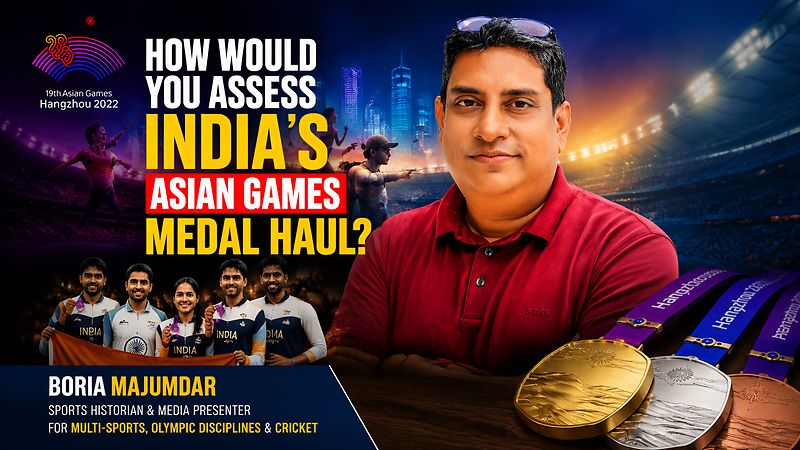
As India reflects on its performance at the Asian Games, a debate emerges over whether the country's medal haul represents significant progress or merely a plateau in its sporting journey. Boria Majumdar, a prominent sports commentator, argues for a nuanced evaluation of India's achievements. He asserts, 'India's Asian Games performance should be judged by Olympic-discipline medals, not totals.' He highlights that India won 12 golds in Olympic disciplines at the Hangzhou Games, increasing to 17 in Nagoya, suggesting a positive trajectory in competitive sports. Majumdar emphasizes the importance of focusing on athletes likely to secure medals at the upcoming Los Angeles Olympics, naming Neeraj Chopra and Murali Sreeshankar as key contenders. He states, 'Today, in athletics, India's podium prospects are three or four strong, which is a significant improvement.'
On the other hand, Faye D'Souza, a popular influencer, brings a broader perspective to the discussion. She recently highlighted Prime Minister Narendra Modi's recognition of Indian athletes during his meeting with participants from both the Asian and Para Asian Games. D'Souza notes, 'Your outstanding performance indicates that India is rapidly emerging as a major power in global sports.' This viewpoint suggests that India's growth in sporting prowess is not only about medal counts but also about the overall recognition and support for athletes.
The disagreement between Majumdar and D'Souza illustrates a critical divide in how success is measured. While Majumdar calls for a focus on Olympic disciplines and future potential, D'Souza emphasizes the importance of current recognition and the spirit of competition. Their contrasting views highlight the complexity of assessing India's sporting achievements.
Moreover, D'Souza's focus on the energetic performances at the Para Asian Games complements Majumdar's arguments. Both creators acknowledge the significance of emerging athletes and the growing infrastructure supporting sports in India. D'Souza’s observation about athletes’ performances reflects a shared optimism about the future of Indian sports, although she frames it within a broader narrative of national pride and recognition.
As the debate unfolds, it becomes evident that both perspectives offer valuable insights into India's sporting landscape. Majumdar's detailed analysis of medal performance and potential future successes contrasts with D'Souza's celebratory tone regarding national progress and recognition. Together, they contribute to a rich dialogue about the direction of Indian sports leading up to the 2026 Asian Games and beyond.