Is India Phasing Out Seniors Too Soon? The Debate on Jaiswal and Gill
Nov 2, 2026, 16:15 IST
Summary
The debate over India's cricketing future centers on whether seniors like Rohit Sharma are being eased out too soon in favor of younger players like Yashasvi Jaiswal. Vikrant Gupta argues for respecting Rohit's experience, while Boria Majumdar supports selectors' choices prioritizing Ishan Kishan's versatility. The discussion highlights the balance between established players and emerging talent.
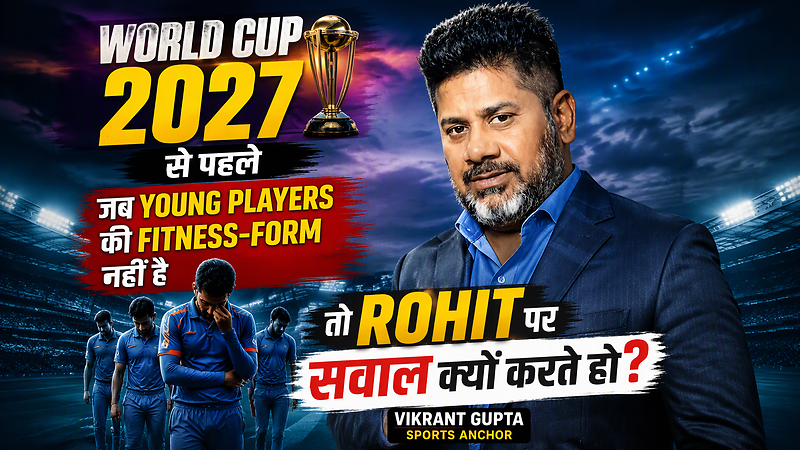
The debate surrounding the potential easing out of senior players like Rohit Sharma in favour of younger talents such as Yashasvi Jaiswal and Shubman Gill has intensified. Opinions vary significantly among prominent content creators, raising questions about the balance between experience and youth in Indian cricket.
Vikrant Gupta, a popular sports commentator, expresses a firm stance in his video about Rohit Sharma's fitness and form as he approaches the 2027 World Cup. He argues that young players cannot guarantee fitness or form, stating, "What guarantee is there of a 24-year-old's fitness? Even your 24-year-old son isn't fit." Gupta believes that Rohit Sharma should not be dismissed prematurely, highlighting his accomplishments as captain, including winning two ICC trophies. He emphasizes the respect that Rohit and Virat Kohli deserve as established players.
In another video, Gupta shifts his focus to Yashasvi Jaiswal, suggesting that Rohit Sharma's position may be reconsidered to protect Jaiswal's prime. He notes concerns about Rohit's recent performances, saying, "Rohit’s fitness and laborious batting have raised concerns about Rohit’s future." Gupta frames the upcoming matches against England as a critical point for Rohit, implying that if he fails to perform, it could signal the end of his ODI career.
Contrasting Gupta's views, Boria Majumdar, a sports journalist, points to the selectors' preference for Ishan Kishan over Jaiswal, arguing that Kishan's versatility better suits India's ODI squad requirements. He explains, "Ishan Kishan can open, bat in the top five, and keep wickets," which adds depth to the team. This perspective highlights a strategic approach from the selectors, suggesting that their decisions are based on immediate team needs rather than long-term planning for Jaiswal.
In another segment, Gupta discusses Jaiswal's future, suggesting that focusing on red-ball cricket may be more beneficial for him than participating in ODIs at this time. He argues, "It is better that you have him practice for the red ball instead," hinting at a potential shift in priorities for young players as they develop their skills.
The debate reflects a broader tension between maintaining experienced players and nurturing young talent. While Gupta champions the idea of respecting seasoned players, he also acknowledges the necessity of preparing the next generation, particularly Jaiswal, for future challenges. On the other hand, Majumdar emphasizes the selectors' pragmatic choices in balancing immediate team needs with the potential of younger players.
As discussions continue, the central question remains: Is India easing out its seniors too soon? The differing perspectives reveal a complex landscape where the value of experience must be weighed against the urgency of integrating fresh talent into the squad.