Kabaddi's Olympic Aspirations: A Divided Perspective on the PKL Effect
Sep 27, 2026, 06:23 IST
Summary
The debate over kabaddi's Olympic aspirations highlights diverging views on the impact of the Pro Kabaddi League (PKL). Vikrant Gupta cites player Jaideep's call for Olympic inclusion, while Nikhil Naz argues that the PKL has narrowed the gap between India and Iran, suggesting a shared evolution in the sport. This dynamic raises questions about the future of kabaddi on the international stage.
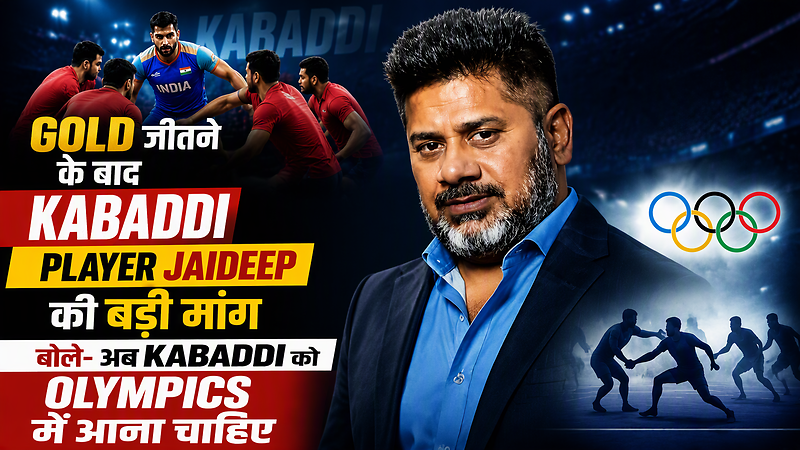
The dream of kabaddi reaching the Olympics has sparked a passionate debate among players and commentators, especially following India's recent gold medal win against Iran. Vikrant Gupta, a sports journalist, highlights the sentiments of kabaddi player Jaideep, who insists, 'We want to go to the Olympics and bring glory to our country there.' This call for Olympic inclusion underscores the aspirations of many athletes who view the international stage as the pinnacle of sporting achievement.
Jaideep's victory has been framed within the context of the Pro Kabaddi League (PKL), which he believes has significantly raised the profile of the sport. Gupta notes that Jaideep credits the PKL for enhancing the skills of Indian players, asserting, 'If we hadn't seen anything, where would we learn from?' This sentiment suggests that the PKL has not only benefited Indian players but has also elevated the competition level globally.
Conversely, Nikhil Naz, a popular Youtuber, adds a layer of nuance by discussing how the PKL has helped close the competitive gap between India and Iran. He argues that the league has been instrumental in narrowing this divide, suggesting that while Indian players have benefited from exposure, so too have their Iranian counterparts. Naz’s perspective offers a more collaborative view of the sport's evolution, stating, 'Pro Kabaddi League has narrowed India’s gap with Iran in kabaddi.' This implies that while India has a stronger team, the competition has become more intense due to the influence of the PKL.
The differing perspectives reveal a complex dynamic in the kabaddi community. On one hand, Jaideep's aspiration for Olympic inclusion reflects a desire for recognition and validation of their efforts on an international platform. On the other hand, Naz's insights suggest that the evolution of kabaddi is not a one-sided affair; the PKL has fostered growth across nations, which could enhance the sport's overall appeal and competitiveness.
This debate raises crucial questions about the future of kabaddi. As players like Jaideep push for Olympic inclusion, they must also contend with the reality that the sport's development is a shared journey among nations. The PKL's impact, as highlighted by both creators, illustrates how domestic leagues can elevate a sport, but they also need to ensure that they do not create an insular environment where one nation dominates.
Ultimately, the conversation around kabaddi’s Olympic aspirations and the PKL effect reflects broader themes of growth, competition, and collaboration in sports. As the players continue to strive for international recognition, the future of kabaddi may well depend on how well they can balance these competing interests.