Politics and Cricket: The Divide in India-Pakistan Relations
Oct 30, 2026, 18:32 IST
Summary
The debate over whether politics should dictate cricket between India and Pakistan reveals contrasting views. Vikrant Gupta highlights India's cricketing superiority and the impact of political tensions on bilateral matches. Nikhil Naz contrasts this with gestures of goodwill in hockey, while Kapil Dev emphasizes adherence to national policies over personal choices, illustrating the complex relationship between sports and politics.
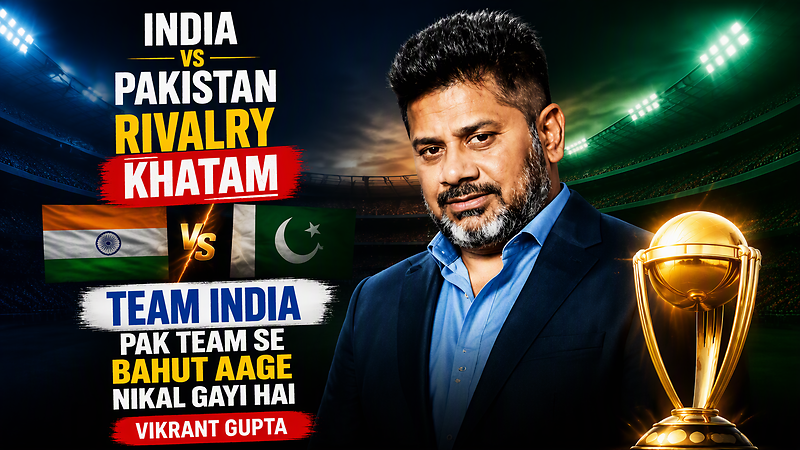
The ongoing debate about whether politics should dictate cricket relations between India and Pakistan has sparked diverse opinions among prominent voices in the sports community. Youtuber Vikrant Gupta argues that India's superiority in cricket is evident, stating that Pakistan's past victories, such as the 2017 Champions Trophy, have only led to temporary highs followed by declines. He notes, 'India silently kept doing its job' while Pakistan's performance faltered, particularly highlighting that recent losses to teams like Bangladesh reflect a significant decline in Pakistan's cricketing prowess.
In a different context, Vikrant Gupta discusses the reasons behind the lack of bilateral Test matches between India and Pakistan. He points out that political and diplomatic differences hinder their ability to play against each other. He asserts, 'This is the reality. Today we all know that this is the world that we are living in,' suggesting that while fans wish for matches to occur, political realities make it unlikely.
Nikhil Naz, a sports commentator, brings in a contrasting perspective by referencing the recent handshakes exchanged between Indian and Pakistani players during the Hockey World Cup 2026. He notes that such gestures in hockey signify a departure from the hostility seen in cricket, particularly after Operation Sindhu. Naz states, 'Politics cannot interfere in this,' indicating that hockey has managed to maintain a level of camaraderie that cricket has not, especially given the lack of handshakes during the Asia Cup.
Adding to this conversation, former cricketer Kapil Dev stresses the importance of adhering to national policies over personal preferences when it comes to sportsmanship. He expresses that if the cricket board advises against shaking hands, he would comply, stating, 'Country's policy bigger than my thought process.' Dev emphasizes the necessity for players to align their actions with governmental decisions, reflecting a broader sentiment that sports and politics are intricately linked.
While Gupta and Dev focus on the implications of political tensions on cricketing relations, Nikhil Naz highlights the potential for sports to bridge gaps, at least in contexts outside of cricket. The handshake incident in hockey suggests that while cricket remains mired in political disputes, other sports may still find ways to foster goodwill. This raises a critical question: can cricket ever escape the shadows of political conflict?
The debate illustrates a complex interplay between sports, national identity, and political realities. Gupta’s assertion about Pakistan’s declining status in cricket contrasts sharply with Naz’s observation of camaraderie in hockey, underscoring the divergent paths these sports have taken in the face of political pressures. Ultimately, the voices in this debate reflect a broader narrative about how sports can either exacerbate or alleviate political tensions, particularly between two nations with a fraught history.