The Sooryavanshi Dilemma: Fast-Track or Hold Steady?
Nov 2, 2026, 13:59 IST
Summary
The debate over whether Vaibhav Sooryavanshi should be fast-tracked into the Indian cricket team ahead of Sanju Samson and Abhishek Sharma highlights differing perspectives. Vikrant Gupta argues for supporting incumbents like Samson, while Nikhil Naz suggests a gradual introduction for Sooryavanshi. The discussion raises questions about player development and the pressures of competition.
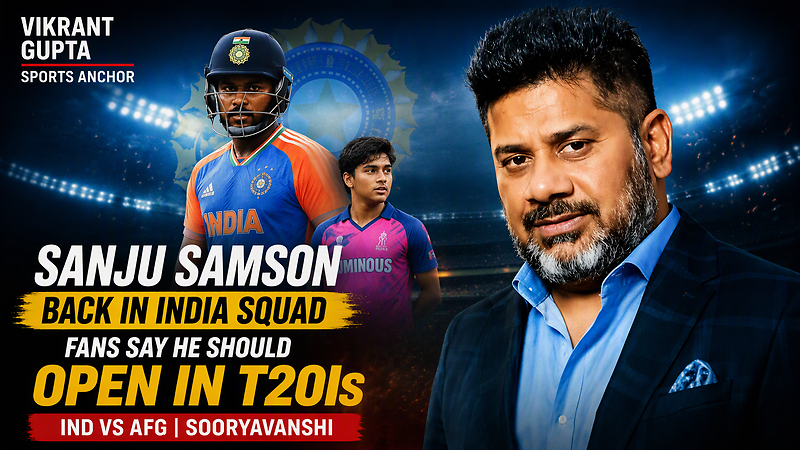
As the Indian cricket team navigates the complexities of player selection, a heated debate emerges over whether young prodigy Vaibhav Sooryavanshi should be fast-tracked into the playing XI ahead of established players Sanju Samson and Abhishek Sharma. The contrasting views reflect deep-seated beliefs about player development, competition, and the team's immediate needs.
Vikrant Gupta, a prominent cricket analyst, argues strongly against the rapid inclusion of Sooryavanshi, emphasizing that the decision to drop Samson to make way for the young player was misguided. He states, "They removed Samson in such a rush just to play Vaibhav Suryavanshi," noting that this decision contributed to India's disappointing series loss in Ireland. Gupta insists that the team should support Samson, highlighting his past achievements, including being the player of the tournament in previous competitions. He believes that the pressure created by Sooryavanshi's presence is unwarranted, as the team management has reassured Samson of his value.
Nikhil Naz, another well-known cricket commentator, presents a nuanced perspective. He argues that while Sooryavanshi is a rising star, the current opening partnership should feature Samson and Abhishek Sharma. He explains, "My first choice openers will be Abhishek and Sanju Samson," suggesting that they form a reliable left-right combination. Naz acknowledges the potential of Sooryavanshi but believes in gradually easing him into international cricket rather than thrusting him into the spotlight prematurely.
However, Naz also reflects on the impatience surrounding Sooryavanshi's debut. He raises a critical point: if the young player struggles initially, will he receive the same patience that is often not afforded to incumbent players like Samson and Abhishek? "If we want to give Vaibhav a long rope, we should extend the same courtesy to the current players," he asserts, advocating for consistency in how players are treated based on their performance.
Gupta further supports this sentiment, stating that the scrutiny around players has intensified due to Sooryavanshi's emergence, creating an uneven standard for success. He points out, "Non-performing batters now face criticism after every two knocks because of Vaibhav," suggesting that this could lead to a cycle of hasty decisions detrimental to team morale.
On the other hand, some voices argue for Sooryavanshi's immediate inclusion based on his impressive performances in domestic leagues. Gupta insists that his extraordinary track record warrants special consideration, stating, "Vaibhav Suryavanshi is special... he’s done something extraordinary." This sentiment is echoed by other commentators who believe that the team should rotate players, allowing Sooryavanshi to gain experience while not necessarily sidelining Samson or Abhishek.
As the team prepares for upcoming matches against Afghanistan and New Zealand, the question remains: should they prioritise the development of a young talent like Sooryavanshi at the expense of established players? While Gupta and Naz present compelling arguments for the incumbents, the allure of Sooryavanshi's potential cannot be ignored. The debate reflects broader themes in sports about nurturing talent versus relying on proven performers, and how teams balance these competing priorities.