Was Asian Games Scheduling Fair to Indian Athletes?
Sep 27, 2026, 03:13 IST
Summary
The debate over the fairness of Asian Games scheduling for Indian athletes highlights significant concerns. Boria Majumdar criticizes the late-night match timings faced by P.V. Sindhu, leaving her little recovery time before her next match. He also points out Unnati Hooda's exhausting draw against a fresh opponent, questioning the level playing field in such circumstances.
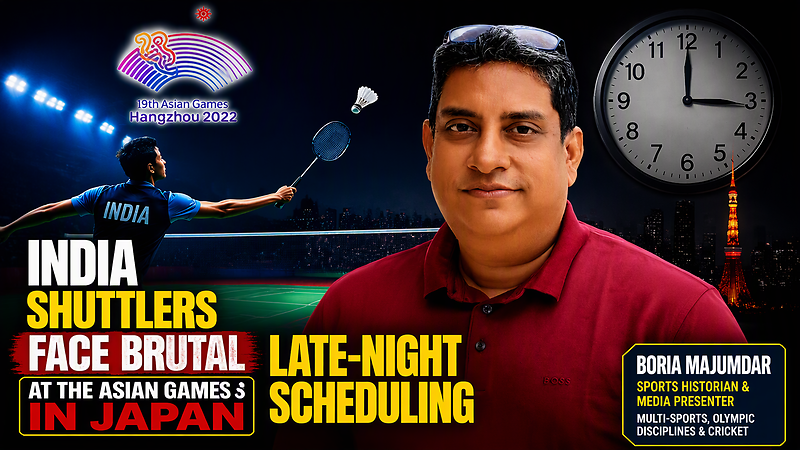
The scheduling of events at the Asian Games has sparked significant debate, particularly regarding the fairness for Indian athletes like P.V. Sindhu and Unnati Hooda. Popular Youtuber Boria Majumdar highlights the challenges faced by these athletes due to late-night match timings and tough draws. He argues that Sindhu's match ended at 1 a.m., leaving her with minimal recovery time before another match scheduled for 1 p.m. the same day. Majumdar emphasizes that this lack of adequate rest creates an uneven playing field, questioning the fairness of such scheduling: 'There is absolutely no way P.V. Sindhu could have rested up before 4 a.m. and then be expected to compete again just hours later.' He compares this situation to what would happen if similar scheduling occurred during major tournaments in India, suggesting that it would not be tolerated.
Further complicating the discussion, Majumdar also addresses Unnati Hooda's situation in another video. He notes that she faced the world No. 6 after completing a grueling 79-minute match, which included intense moments that left both players exhausted. Majumdar argues that such scheduling is detrimental to Hooda, stating, 'When you are doing scheduling, it has to be a level playing field for both parties.' He expresses concern that Hooda, already fatigued, would be at a disadvantage against a fresh opponent, which he sees as a fundamental issue of fairness in sports.
Both perspectives from Majumdar reveal a common thread: the scheduling at the Asian Games is seen as unfairly taxing on Indian athletes. While he highlights specific cases, the broader implication is a critique of the organizing body’s responsibility to ensure fair play through equitable scheduling. This raises questions about how tournament organizers balance logistical challenges with the physical and mental demands placed on athletes, especially in high-stakes competitions like the Asian Games. The consensus among the voices in this debate points to a pressing need for reform in scheduling practices to uphold the integrity of competitive sports.