Who Gets a Long Rope? The Debate on Rinku Singh, Dhruv Jurel, Ruturaj Gaikwad, and Tilak Varma
Nov 2, 2026, 23:57 IST
Summary
The debate on who deserves more opportunities in the Indian cricket team focuses on Rinku Singh, Dhruv Jurel, Ruturaj Gaikwad, and Tilak Varma. Vikrant Gupta questions Rinku's inconsistent selections, while Boria Majumdar highlights the exclusion of Rishabh Pant. Nikhil Naz supports Gaikwad's hopes and praises Varma's performances, indicating a complex selection landscape in Indian cricket.
As the Indian cricket team navigates its selection challenges, the debate over who deserves a long rope in terms of opportunities is heating up. Key players like Rinku Singh, Dhruv Jurel, Ruturaj Gaikwad, and Tilak Varma have become focal points in discussions about merit, management decisions, and the potential for future success.
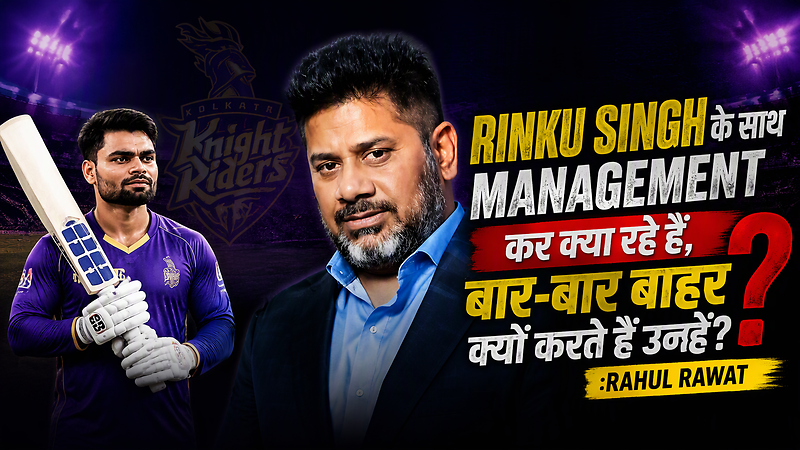
Vikrant Gupta, a prominent sports commentator, raises concerns about Rinku Singh's inconsistent presence in the team. He points out that Rinku has been repeatedly dropped and recalled, questioning the logic behind such management decisions. Gupta argues, "Rinku Singh goes out and then comes back in. What is happening with Rinku Singh?" His stance highlights a perceived lack of clarity in Rinku's status, suggesting that his repeated exclusions reflect poorly on team management.
On the other hand, Boria Majumdar, a respected sports journalist, brings Dhruv Jurel into the conversation, particularly regarding his selection over Rishabh Pant for the ODI squad. Majumdar acknowledges Jurel's recent form but notes that Pant had been sidelined for over eighteen months without a chance to prove himself. He claims, "Rishabh Pant received no ODI opportunity for eighteen months before being dropped," implying that the decision to pick Jurel may have been more about avoiding controversy than purely cricketing logic. This perspective draws attention to the complexities of player selection and the implications of social media scrutiny.
Meanwhile, Nikhil Naz, a sports commentator, discusses Ruturaj Gaikwad's aspirations for a return to the ODI side. He mentions that despite a subdued IPL season in 2026, Gaikwad remains hopeful, stating, "It's just about going back again, making runs again." This sentiment reflects a belief in the importance of consistency and performance, which could resonate with selectors as they consider future line-ups.
Aakash Chopra, another cricket analyst, adds depth to the discussion by examining Rishabh Pant's struggles in white-ball formats. He suggests that Pant needs to improve his singles-taking tempo to succeed in ODIs, mentioning that he played only one ODI in three years before being dropped again. Chopra's insights underscore the competitive nature of team selection, particularly when established players like KL Rahul are performing well, effectively sidelining Pant.
Finally, Nikhil Naz also emphasizes Tilak Varma's potential, suggesting that he could make a place in India's Test team. He praises Varma's strong performances in T20 and 50-over formats, indicating that his contributions are being recognised and could lead to greater opportunities in the future. Naz states, "Tilak Varma has performed strongly in T20 and 50-over cricket," which aligns with the broader narrative of rewarding consistent performers.
As the debate unfolds, it becomes clear that the selection process for the Indian cricket team is fraught with complexities. While some argue for the need for continuity and support for players like Rinku Singh and Ruturaj Gaikwad, others highlight the merits of newer talents like Dhruv Jurel and Tilak Varma. The challenge remains: who truly deserves a long rope, and how do selectors navigate the fine line between performance and potential? This ongoing dialogue will likely shape the future of Indian cricket as it prepares for significant upcoming tournaments.