Wicket-Takers or Bits-and-Pieces? India's Bowling Dilemma Ahead of the 2027 World Cup
Oct 29, 2026, 09:19 IST
Summary
The debate over India's bowling strategy ahead of the 2027 World Cup intensifies as creators like Vikrant Gupta argue for the necessity of wicket-takers instead of merely focusing on batting depth. Critics like Rahul Rawat and Sunil Gavaskar echo these sentiments, highlighting vulnerabilities exposed in recent matches. The consensus suggests a pressing need for strategic reassessment to bolster India's bowling lineup.
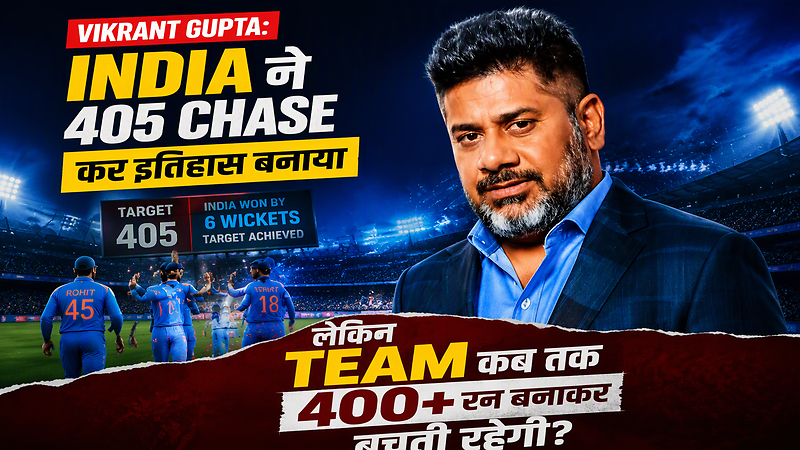
As India prepares for the 2027 World Cup, a debate has erupted over the effectiveness of its current bowling strategy, particularly in light of recent performances against the West Indies. Popular Youtuber Vikrant Gupta argues that India’s reliance on batting depth at the expense of wicket-taking bowlers has led to significant vulnerabilities. He emphasizes that the team’s recent history of conceding 400-plus runs, such as during a match where Shubman Gill and Virat Kohli's centuries saved them from defeat, cannot continue. Gupta states, "How long will you keep getting saved?" highlighting the unsustainable nature of this strategy.
Gupta further elaborates on India’s bowling issues in another video, pointing out that the team has moved towards a defensive mindset, choosing players who can bat over those who can take wickets. He recalls how the 2023 World Cup-winning formula included bowlers like Jasprit Bumrah, Mohammed Shami, and Mohammed Siraj, asserting that without wicket-takers, India will struggle to contain high-scoring teams. He notes, "You can never pick a bowler thinking he will hit two sixes at number eight."
Contrastingly, Rahul Rawat, a sports journalist, also critiques India's current bowling selections. He mentions that recent matches have exposed the bowling attack's weaknesses, particularly after the West Indies chased down 351 runs against India. Rawat points out that the absence of Jasprit Bumrah reveals how fragile the bowling depth is, stating, "If your bowling is in this state in the absence of one person, one bowler, then it is a mirror to your resources."
Adding to this, Nikhil Naz, a sports commentator, challenges the notion of Siraj's role in the team, questioning why he plays if the management does not trust him as a death bowler. He argues that fast bowlers must be reliable in all match phases, underscoring a broader concern about the team's bowling strategy.
Former cricketer Sunil Gavaskar weighs in, advocating for a shift from the current approach of playing eight batters, which he believes undermines the bowling unit. He recommends a lineup of four specialist bowlers complemented by all-rounders, stating, "Trying to fit in eight batters has weakened India's bowling."
This sentiment is echoed by Gupta, who insists that the focus should be on strengthening the bowling attack rather than extending batting depth. He argues that India's performance against the West Indies has exposed the hollowness of its bowling strategy, asserting that, "India's bowling resources are being depleted."
As the debate unfolds, it is clear that there is a consensus on the need for India to reassess its bowling strategy. While some creators emphasize the importance of wicket-takers, others highlight the need for a more balanced approach that does not compromise bowling for batting depth. With the World Cup on the horizon, the pressure is on the team to make critical adjustments to ensure a competitive edge.