AI and Jobs: Creator or Destroyer?
Oct 27, 2026, 03:30 IST
Summary
The debate on AI's impact on jobs reveals contrasting views. The Indian Express argues AI will transform labor markets and create new jobs, while Business Standard presents data showing job creation outpacing layoffs in India. Andrew Ng believes AI will augment rather than replace jobs, contrasting with Nitin Seth's warning of potential job loss. Kris Gopalakrishnan notes AI's growing role in programming.
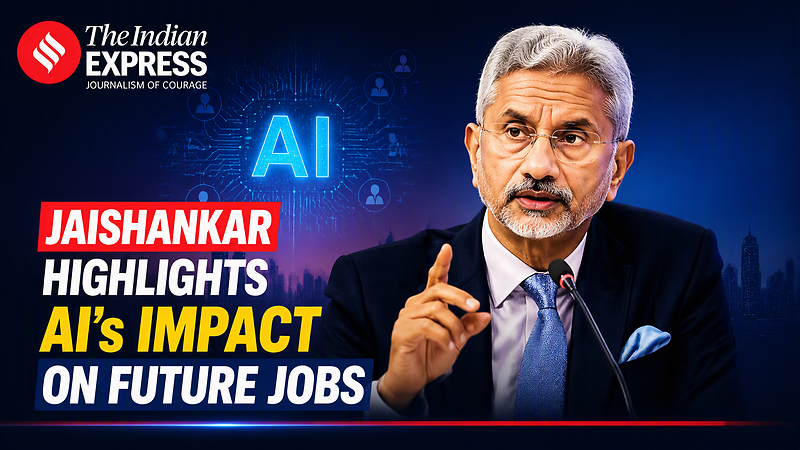
The debate surrounding the impact of artificial intelligence (AI) on jobs has intensified, with voices from various sectors weighing in on whether AI will be a creator or destroyer of employment opportunities. The Indian Express highlights that AI and automation are set to transform labor markets significantly, noting that while some jobs may change dramatically, new categories of employment will emerge. They emphasize the growth of the green economy and the increasing demand for skills in healthcare as populations age.
In contrast, Business Standard presents a more optimistic view, arguing that AI is currently creating more jobs than it is eliminating in India. According to their report, AI-related hiring has reached 83,100 jobs, outpacing the 31,921 jobs lost due to AI-related layoffs. They note that while AI creates a two-tier job market—reducing entry-level roles while increasing demand for experienced professionals—the overall impact suggests a net positive for job creation.
Another report from Business Standard adds nuance to this discussion by explaining how companies are beginning to hire again after initially slowing down due to AI. The report indicates that businesses are realizing that while AI can automate routine tasks, human expertise remains essential. Companies like Booz Allen Hamilton and Ford have found that they need more employees to work alongside AI technologies, contradicting earlier assumptions that AI would lead to fewer jobs.
Andrew Ng, a prominent figure in AI, argues that the narrative surrounding AI's threat to jobs is overstated. He believes that AI will augment the current workforce rather than replace it, pointing to an increase in software engineering job postings as evidence that AI can enhance productivity. Ng insists that the key challenge is equipping workers with the necessary skills to thrive in an AI-driven economy.
Conversely, Nitin Seth warns of a more dystopian future, suggesting that AI could potentially eliminate 50% of jobs. He stresses the importance of solving problems rather than simply seeking employment, reflecting a broader concern about humanity's future in the face of rapid technological advancements.
Kris Gopalakrishnan highlights the evolving nature of programming, suggesting that as AI begins to outperform humans in writing code, the focus may shift towards debugging and enhancing AI-generated software. This perspective aligns with Ng's views on the necessity of adapting to new technological realities.
In summary, while there is a consensus that AI will reshape the job landscape, opinions diverge on whether this transformation will lead to net job creation or destruction. The ongoing dialogue suggests that preparation and adaptation will be critical as society navigates this complex terrain of AI and employment.