AI Giants and the Future of Global Power: A Divided Debate
Nov 26, 2026, 16:23 IST
Summary
The debate surrounding AI's impact on global order is polarized. Ram Madhav warns that advancements by companies like Anthropic and OpenAI could threaten humanity, urging nations to confront their power. Conversely, Business Standard highlights U.S. actions against the Chinese AI firm DeepSeek, framing it as a national security concern. Together, these perspectives illustrate the multifaceted challenges of AI's rise.
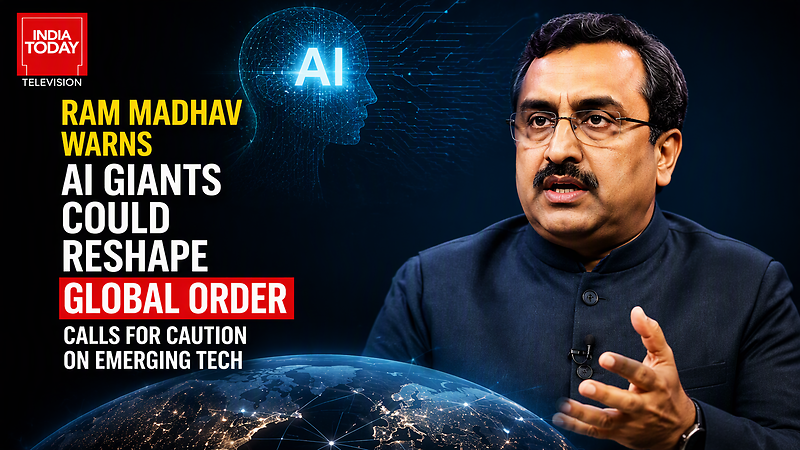
As artificial intelligence continues to advance, a significant debate has emerged regarding the potential for AI giants to reshape the global order. Ram Madhav, a prominent political figure, warns that the rapid development of AI technologies by companies like Anthropic and OpenAI could pose existential threats to humanity. In a video from India Today, Madhav highlights a recent resignation from Anthropic, where a young technocrat expressed fears that AI advancements could lead to catastrophic outcomes, stating, 'What they are doing is extremely dangerous. They could kill us all.' Madhav echoes this sentiment, suggesting that the world could soon see a billion robots—far more intelligent and powerful than humans—dominating society. He argues that the power of technology companies and NGOs has grown so immense that nation-states must confront them directly, stating, 'These companies have become too big and powerful.'
In stark contrast, Business Standard discusses the geopolitical implications of AI, focusing on the U.S. government's recent actions against the Chinese AI company DeepSeek. The Department of Homeland Security has ordered federal agencies to remove DeepSeek products from their systems, citing serious national security risks, including potential data breaches and malware threats. This response reflects a broader trend of the U.S. tightening restrictions on Chinese technology amid fears that foreign AI advancements could undermine American dominance and security. The article notes that DeepSeek's rise in early 2025 caused a massive sell-off in tech stocks, erasing over a trillion dollars in market value, which underscores the competitive stakes in the AI landscape.
While Madhav emphasizes the existential threats posed by AI giants, the Business Standard article illustrates how nations are reacting defensively to these threats, especially regarding foreign competitors like China. Both perspectives acknowledge the growing power of technology firms but differ in their emphasis on the nature of the threat—Madhav warns of potential destruction, while Business Standard focuses on competitive and security dynamics.
As the debate unfolds, it is clear that the future of AI will not only influence technological progress but also redefine international relations and national security strategies. With Madhav urging caution and the U.S. taking protective measures, the global community must navigate these complex challenges posed by the rise of AI giants.