AI Investment: Boom or Bust?
Oct 31, 2026, 10:02 IST
Summary
Nikhil Kamath warns of a $700–800 billion funding gap in AI investment, predicting challenges for startups by 2027. In contrast, Anthropic prepares for an IPO despite reporting an $807 million loss, raising questions about sustainable returns in the AI sector. The debate highlights the tension between ambitious growth and financial viability in the AI boom.
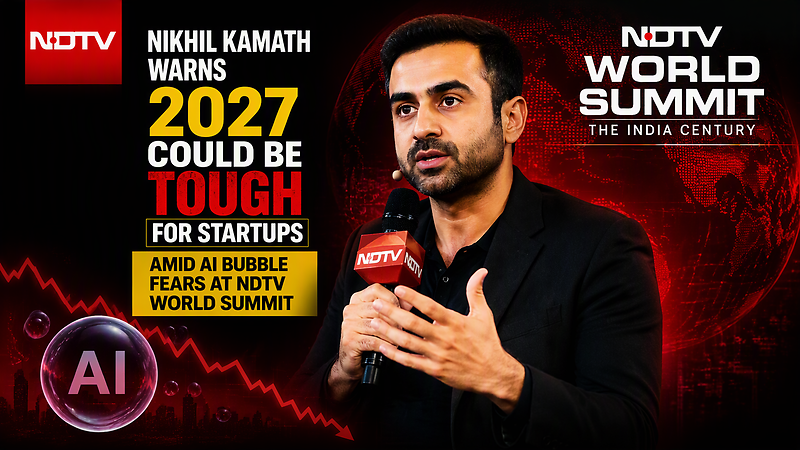
The debate surrounding the sustainability of the current AI investment boom is heating up, with prominent voices weighing in on the potential risks and returns. Nikhil Kamath, a co-founder of Zerodha, warns of a significant financial gap in the AI sector. He claims, 'Artificial intelligence receives about $1 trillion annually but generates only $100–200 billion.' This staggering $700–800 billion gap raises concerns about the viability of continued investment. Kamath suggests that with rising US borrowing costs, securing funding for startups may become increasingly difficult by 2027.
In contrast, the tech company Anthropic, known for its AI system Claude, is preparing for a potential IPO, with plans to list on Nasdaq under the ticker ANT. This move has ignited discussions about whether the company can justify the hefty costs associated with AI development. According to reports, Anthropic recorded a loss of $807 million in the first half of 2026, prompting investors to question if the demand for AI services can eventually translate into sustainable returns. The company faces fierce competition from established players like OpenAI and Google, making the stakes even higher.
Both Kamath and the situation surrounding Anthropic highlight the uncertainty in the AI investment landscape. Kamath emphasizes the need to bridge the funding gap to achieve the projected productivity gains of $6 to $7 trillion that AI is expected to bring. He states, 'Finding this new money every year is crucial.' On the other hand, Anthropic's IPO plans suggest a belief in the long-term potential of AI, despite the significant financial risks involved.
Moreover, the broader market conditions are contributing to this uncertainty. Companies that provide essential infrastructure for AI, such as data centers, have faced stock price declines, indicating investor wariness. This backdrop makes the financial viability of AI startups, including Anthropic, even more pressing.
Ultimately, the dialogue between Kamath's caution and Anthropic's ambitious plans illustrates the complex dynamics at play in the AI boom. Investors and stakeholders must navigate the delicate balance between potential innovation and the harsh realities of financial sustainability. As the debate unfolds, one question remains: can massive investment in AI deliver the sustainable returns that many are banking on, or are we witnessing the early signs of an unsustainable bubble?