AI: Job Killer or Creator? A Clash of Perspectives
Oct 28, 2026, 16:48 IST
Summary
The debate on AI's impact on white-collar jobs features diverse perspectives. Sharan Hegde argues AI highlights human judgment, while Neha Nagar warns of job losses in Indian IT. Sanjay Kathuria cites significant layoffs by Microsoft, contrasting with Prakhar Gupta's view that AI can't replace artists. Paras Madan questions AI's job creation potential, showcasing a complex narrative about AI's role in the workforce.
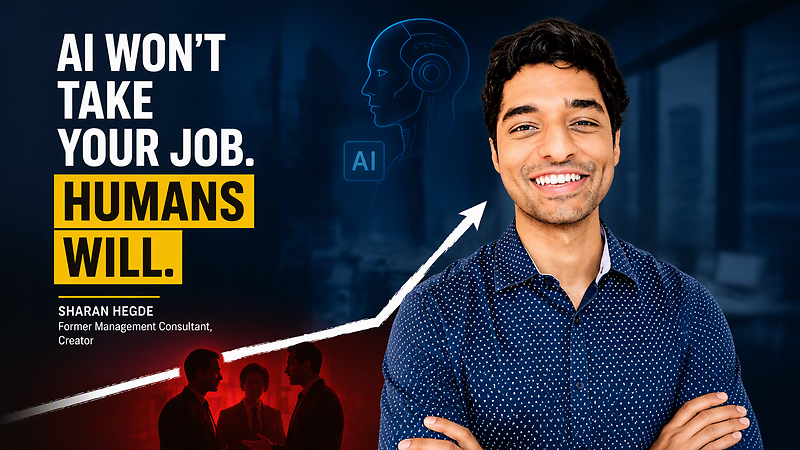
The debate over whether artificial intelligence (AI) will eliminate white-collar jobs or generate new opportunities is heating up, with voices from various creators expressing differing views. Sharan Hegde, a popular Youtuber, contends that AI won't replace humans but rather highlight their unique capabilities. He argues, 'Human judgment remains necessary where AI systems cannot make decisions,' suggesting that India's proficiency in English and technical skills positions it well for a future where AI creates an 'IT services 2.0' industry.
Conversely, Neha Nagar, a Youtuber, raises concerns about AI's impact on Indian IT jobs. She argues that while some roles will vanish, others will emerge, stating, 'AI-driven transition will not collapse Indian IT, despite role changes.' Nagar believes that Indian outsourcing may face challenges as foreign companies begin to rely more on AI rather than human labor. However, she also encourages students to adapt by acquiring relevant skills in AI platforms.
Nagar further elaborates in another video, discussing how placements from prestigious institutions like IIT and IIM have dropped by 10–20% in the past two years due to AI's rise. She draws parallels to the introduction of computers in the banking sector in 1985, which initially sparked fears of job loss but ultimately led to increased productivity and the creation of new roles.
On the other hand, Sanjay Kathuria, a Youtuber, highlights a concerning trend where major corporations like Microsoft have laid off thousands of employees, stating, 'Microsoft offered voluntary exits to 60,000 employees, representing 27% of its workforce.' He notes that AI has replaced many entry-level jobs, emphasizing that 'coding, graphic designing... basic tasks are now easily done by AI.' This starkly contrasts Hegde's optimistic view, suggesting a more immediate threat to jobs.
The debate also extends to the creative industries, where Prakhar Gupta argues that AI cannot replace artists. He shares an experience where an AI-generated music video faced backlash, illustrating that while AI can assist, it cannot replace the authenticity of human creativity. Gupta insists that artists remain essential, stating, 'Artists opposing AI-generated images are wrongly labelled insecure about losing jobs.'
Adding a more critical perspective, Paras Madan highlights the paradox of AI's promise to create jobs, citing Microsoft's layoffs as evidence that the technology may not live up to its potential. He asserts, 'AI cannot create jobs, at least not this quickly,' underscoring a growing skepticism regarding AI's role in the workforce.
As the discourse unfolds, it is clear that while some creators see AI as a tool for empowerment and growth, others perceive it as a significant threat to job security. The question remains: will AI ultimately enhance the workforce or dismantle it? The answers are as varied as the creators themselves, reflecting a complex and evolving narrative about the future of work in an AI-driven world.