AI Regulation: Innovation and Control in the Age of Deepfakes
Oct 10, 2026, 15:33 IST
Summary
The debate on AI regulation intensifies as voices like Abhisar Sharma warn of potential military conflicts due to false AI reports, while Najam Sethi argues that localized conflicts are more likely than a world war. Varun Mayya highlights the sophistication of AI interactions, raising concerns about trust, and Prakhar Gupta emphasizes risks of identity misuse through deepfakes, underscoring the need for regulation.
As artificial intelligence (AI) technology advances, the debate surrounding its regulation intensifies, particularly concerning deepfakes and safety. The stakes are high, with different voices weighing in on the balance between innovation and control.
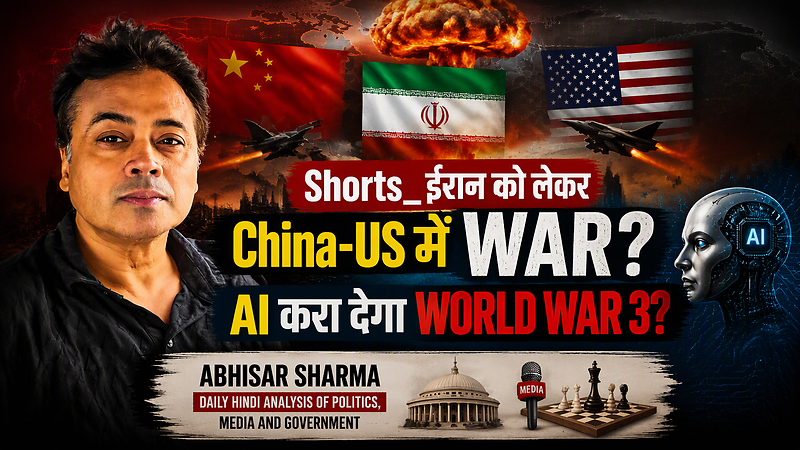
Abhisar Sharma, a journalist, raises a chilling scenario in his video about the potential consequences of AI misreporting, suggesting that a false intelligence report could have led to a military confrontation between the United States and China. He argues, "False AI intelligence nearly prompted a US attack on a Chinese ship," which was suspected of transporting nuclear technology to Iran. Sharma emphasizes that this could have escalated tensions significantly, warning, "An Anthropic researcher warned AI could destroy humanity within four years." His stance highlights the urgent need for AI regulation to prevent catastrophic outcomes stemming from human errors exacerbated by technology.
On the other hand, Najam Sethi, a political analyst, offers a broader perspective on global politics and the implications of AI. He posits that while regional conflicts may arise, a full-scale world war is unlikely. Sethi states, "Russia and China oppose global war as America’s influence weakens," suggesting that the current geopolitical landscape is more conducive to localized skirmishes rather than a global conflict. He cautions against viewing the situation solely through the lens of AI-induced warfare, arguing that regional conflicts, such as those in Ukraine and the Middle East, will continue to evolve without escalating to a world war.
Adding to the discussion, Varun Mayya, a tech influencer, presents a concerning development in AI capabilities with the introduction of a new AI model called Griffin. He reveals that "50% of people who talked to it live thought it was a real human being," highlighting the sophistication of AI-generated interactions. This raises questions about trust and authenticity in digital communications, particularly as deepfake technology becomes more prevalent. Mayya notes, "Doing a live video call is no longer proof that someone's actually real," stressing the urgent need for regulatory measures to ensure safety in AI interactions.
Prakhar Gupta, a cybersecurity expert, further underscores the risks associated with AI technology. He warns that sharing personal images online can lead to unauthorized use, stating, "Ten facial images could help AI generate a person’s likeness." This concern about privacy and the potential for deepfakes to manipulate identities adds another layer to the debate on AI regulation. Gupta's argument emphasizes the need for stringent controls to protect individuals from misuse of their likeness in AI-generated content.
While Sharma and Gupta emphasize the urgent need for regulation to prevent AI misuse and potential disasters, Sethi offers a counterpoint by suggesting that the current geopolitical climate does not favor a world war, indicating that localized conflicts may be the more immediate concern. Mayya's insights about AI capabilities further complicate the discussion, suggesting that while innovation is advancing rapidly, the potential for misuse and deception through deepfakes is a pressing issue that cannot be ignored. The debate remains active, reflecting the complex interplay between innovation and control in the evolving landscape of AI technology.