Is Meta Compromising Its Integrity by Siding with the Government?
Nov 24, 2026, 12:19 IST
Summary
The debate over whether Meta is siding with the government features contrasting views from content creators. ulta chasma uc pragya mishra highlights a technical glitch in removing Modi's video, while the red mike saurabh shukla criticizes Meta for suspending Gen Z movement accounts. Sandeep Deo argues Meta aids the BJP by labelling anti-BJP content as fake news, emphasizing concerns about free speech.
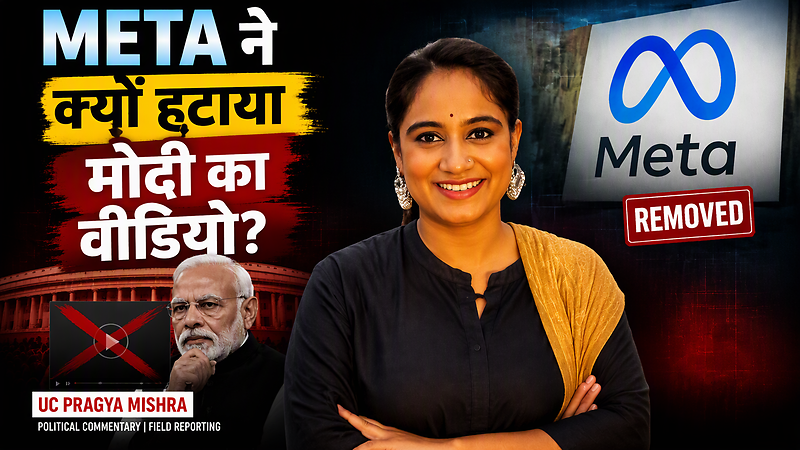
The debate surrounding whether Meta is siding with the government intensifies as various content creators weigh in with contrasting views. One notable perspective comes from ulta chasma uc pragya mishra, who claims that Meta temporarily removed a selfie video of Indian Prime Minister Narendra Modi following the Jantar Mantar protests. Mishra states, 'Meta restored the video, saying a technical glitch caused its removal,' suggesting that the action may have been influenced by governmental pressures regarding content related to Modi and the protests.
In stark contrast, popular Youtuber the red mike saurabh shukla expresses outrage at Meta's handling of accounts associated with the Gen Z movement, stating, 'WhatsApp suspends accounts sharing BJP or Gen Z movement statuses.' He criticizes Meta for not acting against accounts promoting communal hatred, arguing that the platform is engaging in favouritism towards the government. Shukla warns, 'If this bad behaviour doesn't stop, India's youth could shift to Signal or Telegram within five minutes.'
Adding another layer to the discussion, Sandeep Deo from India Speak Daily claims that Meta actively aids the BJP by labelling anti-BJP content as fake news. He asserts, 'Meta helps BJP by labelling anti-BJP reports fake and banning users,' suggesting a systematic bias in content moderation that favours the ruling party. Deo's frustration highlights a belief that Meta prioritizes profit over fairness, saying, 'Mark Zuckerberg makes money by controlling people and selling their data.'
While all three creators criticize Meta's actions, their arguments highlight different aspects of the perceived bias. Mishra focuses on a specific incident involving Modi's video, implying a technical mishap that could be interpreted as a governmental influence. Shukla and Deo, however, broaden the critique to encompass a pattern of behaviour, pointing to Meta's inconsistent moderation policies that seemingly protect certain political narratives while silencing others.
Despite their disagreements, there is a shared concern among these voices regarding the implications of Meta's actions for free speech and democratic discourse in India. Each creator underscores the potential consequences of Meta's alignment with governmental interests, calling for accountability and transparency in the platform's content moderation practices. As this debate unfolds, it raises critical questions about the role of social media in shaping political narratives and the responsibilities of tech giants in democratic societies.