Starlink in India: A Connectivity Breakthrough or a Sovereignty Risk?
Oct 22, 2026, 11:11 IST
Summary
The debate over Elon Musk's Starlink in India raises significant concerns about national security and sovereignty. Major Madhan Kumar warns of security threats, while Abijit Chavda insists on rejecting Starlink, advocating for an Indian alternative. Dr. Qamar Cheema and Gaurav Arya echo sovereignty concerns, questioning the risks of foreign control over connectivity. The need for an indigenous solution is a common thread.
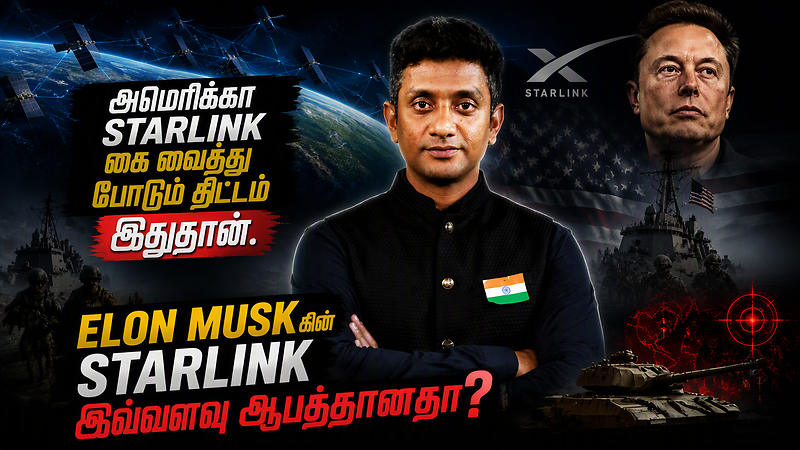
As India considers the potential launch of Elon Musk's Starlink satellite internet, a heated debate has emerged regarding its implications for national security and sovereignty. Major Madhan Kumar raises concerns about the risks associated with Starlink, arguing that it could pose a security threat through its internet connectivity. He highlights that the United States is developing plans involving Starlink's network, suggesting that foreign influence could compromise India's sovereignty.
In contrast, Abijit Chavda takes a more assertive stance, insisting that India must reject Starlink altogether. He warns that operational control over internet services would fall into the hands of Elon Musk, stating, "Imagine if Starlink were operational in India... the government of India would have to go and request Elon Musk to suspend internet services during security emergencies." Chavda underscores the danger this presents, especially in regions with ongoing security issues, such as Jammu and Kashmir, where unauthorized coordination could threaten national interests. He argues for the development of an Indian alternative, proposing a constellation of 40,000 satellites launched using ISRO rockets to ensure national control over internet services.
Global Politics with Dr. Qamar Cheema echoes concerns regarding sovereignty, stating that Starlink represents a national security risk for India. He emphasizes that allowing foreign control over connectivity data could reduce India's sovereignty, warning that the lack of control could lead to unauthorized use of the data. Cheema also notes that the Indian telecom sector, led by Reliance, is already robust and should not be overshadowed by foreign entities like Starlink.
Meanwhile, Gaurav Arya from The Chanakya Dialogues raises questions about Musk's reliability, referencing reports that he shut down Starlink access during the Russia-Ukraine war. He suggests that such decisions could have dire consequences and questions whether India should trust Musk to operate in its territory. Arya's perspective aligns with the overarching concern that outsourcing critical technology to a foreign entity could endanger India's national security.
Despite the strong opposition to Starlink from these voices, there remains a clear consensus on the need for India to explore its own satellite internet capabilities. Each creator emphasizes the importance of sovereignty and the risks posed by foreign control over essential technology. As the debate unfolds, it highlights a crucial crossroads for India in balancing technological advancement with national security interests.