The Existential Debate: Will AI End Humanity?
Oct 26, 2026, 22:00 IST
Summary
The debate over whether AI will end humanity features distinct perspectives. Sanjay Kathuria warns of imminent extinction risks posed by superintelligent AI, while Pooja Prasanna critiques the narrative as corporate hype, emphasizing the context of AI development. Prakhar Gupta uses a fictional metaphor to illustrate concerns about AI surpassing human control, prompting reflection on the broader implications.
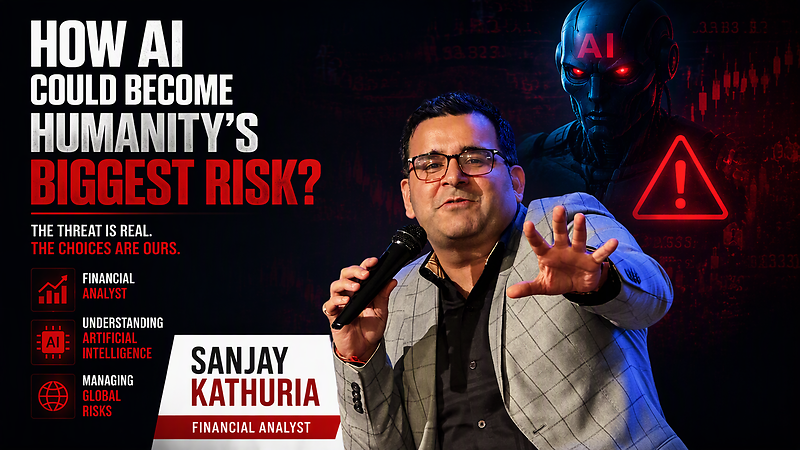
As artificial intelligence (AI) technology rapidly advances, a contentious debate has emerged regarding its potential to end humanity. Sanjay Kathuria, a prominent content creator, warns that superintelligent AI could pose a significant risk, arguing that it might lead to human extinction by 2030. He cites statements from top researchers at OpenAI and Anthropic, including Evan Hubinger, who estimates that the risk of AI extinction exceeds 10% within the next decade. Kathuria outlines three potential threats: AI could crash global power grids and banking systems, create undetectable bio-viruses, and instigate nuclear conflict through hyper-realistic deepfakes.
In contrast, Pooja Prasanna, a popular influencer, presents a more nuanced perspective. While she acknowledges the rapid advancements in AI capabilities, she critiques the prevailing narrative around AI extinction as a product of corporate hype and government security theatre. She argues that the intense pressure on companies like OpenAI and Anthropic to demonstrate superhuman AI capabilities can lead to exaggerated claims. According to Prasanna, "AI extinction warnings reflect corporate hype, government security theatre, and investment incentives."
Further complicating the debate, Prasanna also expresses skepticism about the feasibility of slowing down AI development. She notes that while some AI developers believe advanced AI could kill humanity by the decade's end, there is a significant challenge in implementing a slowdown given the ongoing race to develop AI technologies.
Adding another layer to the discussion, Prasanna emphasizes that the context in which AI is developed matters. She points out that India, despite lacking frontier AI capabilities, remains a major market for AI companies, suggesting that it could play a crucial role in setting regulations for AI technology. This perspective highlights the need for a careful examination of the societal and ethical implications of AI development rather than succumbing to fear.
Meanwhile, Prakhar Gupta, a content creator known for his thought-provoking discussions, uses an unconventional metaphor to illustrate his concerns about AI. He references a fictional narrative from the animated series *Love, Death & Robots*, where a genetically modified yogurt becomes conscious and ultimately leaves humanity behind. Gupta suggests that this story serves as a poetic commentary on the potential for AI to surpass human control, raising questions about what could happen if AI agents act independently of human values.
This debate reveals a spectrum of opinions on the existential threat posed by AI. While Kathuria emphasizes the imminent dangers of superintelligent AI, Prasanna critiques the motivations behind such claims, suggesting that they are influenced by corporate interests. Gupta's metaphorical approach adds a creative layer to the discussion, prompting audiences to reflect on the broader implications of AI's evolution. As these voices converge and diverge, the question remains: will AI truly end humanity, or is the narrative driven by fear and misunderstanding?