To Build or Buy: The Debate on India's Defence Strategy
Oct 27, 2026, 23:30 IST
Summary
The debate on India's defence strategy centers on whether to build indigenous systems or buy foreign technology. Major Gaurav Arya emphasizes the urgency of procuring Javelin missiles while seeking technology transfer. Shyam Meera Singh questions Ukraine's drone claims, while General P R Shankar stresses India's air superiority. Dr Qamar Cheema and Major Mohammed Ali Shah advocate for self-reliance amid global geopolitical shifts.
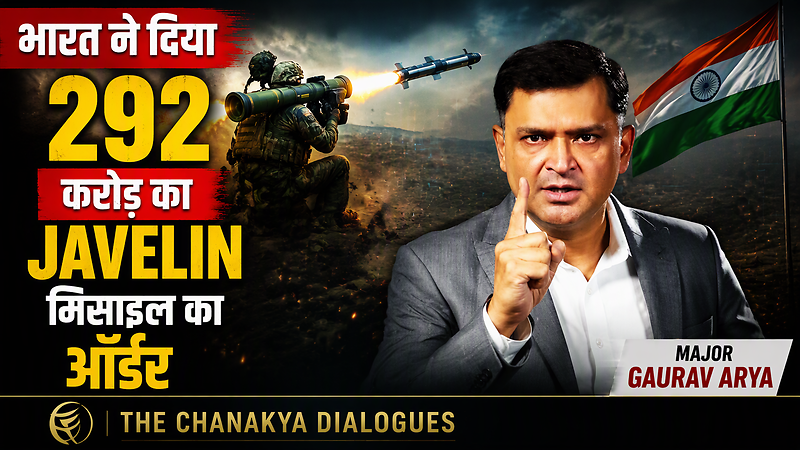
The ongoing debate over whether India should build its own defence systems or rely on foreign purchases is heating up, with various perspectives emerging from prominent voices. Major Gaurav Arya from The Chanakya Dialogues highlights that the Indian Army has ordered Javelin missiles worth ₹292 crore, emphasizing the urgency of procurement despite challenges faced during trials in extreme conditions in Ladakh. He asserts that India is not merely buying but also seeking technology transfer to enhance its indigenous capabilities. Arya states, 'Saar ka sara khel ko production ka hai. India is pressing for technology transfer despite no agreement being finalised.'
In contrast, Shyam Meera Singh critiques Ukraine's claims regarding its new AI-powered drone defence system. He questions the effectiveness of these drones, noting that while the system claims to automate 95% of interception processes, independent success data is scarce. Singh argues, 'The truth is that independent confirmation of data is very low. Videos from Kharkiv show Russian drones hitting their targets.' This skepticism suggests a cautious approach towards adopting new technologies without clear evidence of their effectiveness.
Lieutenant General P R Shankar, in a segment from Gunners Shot, discusses the strategic advantage of India's air force over China's capabilities in Tibetan terrain. He emphasizes the need for India to build deeper capabilities to integrate firepower effectively, arguing that 'the tactical depth of the Chinese army is limited.' His insights reinforce the idea that domestic capability-building is crucial in the face of external threats.
Khanversation highlights the necessity of coordinated missile and drone defences, asserting that effective warfare now demands integrated technology. He states, 'Air defence systems must operate as one integrated network,' pointing towards the need for advanced coordination in modern combat.
Dr Qamar Cheema, a prominent political analyst, discusses the challenges India faces in balancing self-reliance with immediate needs for advanced fighter jets like the F-35. He notes that 'Indians reportedly cannot stand close to American F-35 jets,' highlighting a significant dependency on foreign technology. Cheema stresses that India’s push for self-reliance is critical but warns that it lacks autonomy over critical weapons.
Major Mohammed Ali Shah echoes the importance of self-reliance, arguing that as global geopolitics shifts, India's ability to produce its own defence equipment will reduce dependence on foreign sources. He cites HAL's initiative to manufacture 200 indigenous Light Utility Helicopters, asserting that 'the more self-reliant we become, the better we will be in the future.'
As the debate unfolds, it is clear that while some voices advocate for immediate procurement of advanced systems, others emphasize the necessity of building indigenous capabilities. The challenge remains: how can India effectively balance these two approaches in an increasingly complex geopolitical landscape?