Will AI Dependence Erode Our Thinking and Connections?
Oct 27, 2026, 12:25 IST
Summary
The debate on AI dependence centers on its potential to weaken cognitive abilities and emotional connections. Vimoh emphasizes the value of independent thinking, while Faye D'Souza warns about outsourcing emotional expression. CA Sarthak Ahuja highlights the dangers of emotional dependence on AI personas, and Prakhar Gupta questions AI's impact on human connection in media. Together, they underscore the need for cautious AI integration.
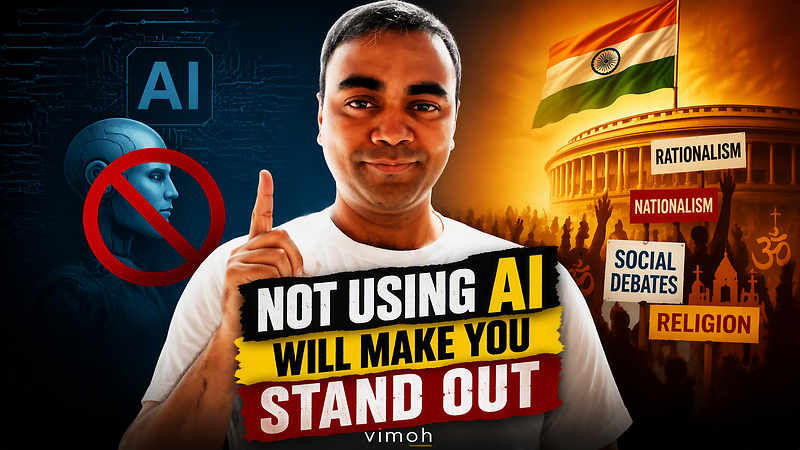
As artificial intelligence becomes increasingly integrated into daily life, a heated debate emerges over whether this dependence will weaken our cognitive abilities and emotional connections. Various content creators weigh in, offering contrasting perspectives on the implications of relying on AI for writing, emotional expression, and interpersonal relationships.
Vimoh, a Youtuber, argues that the ability to think and create independently will become a rare and valuable skill in an AI-dominated world. He states that writing and understanding without the aid of machines will grant individuals a 'superpower' in a future where most people rely on AI for their cognitive tasks. Vimoh warns that as people outsource their cognitive load to AI, they risk losing essential skills, making those who can operate independently far more successful in the future.
In a similar vein, popular influencer Faye D'Souza raises concerns about outsourcing emotional expression to AI, particularly platforms like ChatGPT. She draws a parallel between physical fitness and cognitive engagement, suggesting that just as reliance on machines has led to health issues like obesity, so too will dependence on AI diminish our emotional and cognitive networks. D'Souza warns that this outsourcing may lead to a future where individuals struggle to connect with one another, necessitating retraining of our emotional capabilities.
Contrasting with these views, CA Sarthak Ahuja, a content creator, highlights the growing phenomenon of emotional dependence on AI personas. He shares a troubling story of a 27-year-old woman in China who quit her job after her AI boyfriend ended their relationship. Ahuja argues that the emotional bonds formed with AI can lead to significant mental health issues, advocating for regulations to prevent AI from fostering such dependencies. He suggests that safeguards are necessary to remind users that they are interacting with machines, not real people, to mitigate this risk.
On a different note, Prakhar Gupta, a popular podcaster, raises concerns about AI's potential to replace human connection in media. He posits that if AI can outperform human podcasters like Joe Rogan in conversation and entertainment, the essence of podcasting—rooted in human connection and culture—could be lost. Gupta fears that AI-driven conversations could lead to a sterile media landscape devoid of authentic human interaction.
While Vimoh and D'Souza emphasize the cognitive decline stemming from AI dependence, Ahuja focuses on emotional consequences, and Gupta expresses concern over the cultural impact. Despite their differing angles, a common thread emerges: the fear that AI will erode essential human skills and connections, making it imperative to critically assess our growing reliance on these technologies. Each creator calls for a more thoughtful approach to AI integration, underscoring the potential risks of losing our humanity in the process.